Offers of money for a night: what women in Ivorian showbiz are saying
 ">La Seductrice
Follow on X
Send an email
">La Seductrice
Follow on X
Send an email
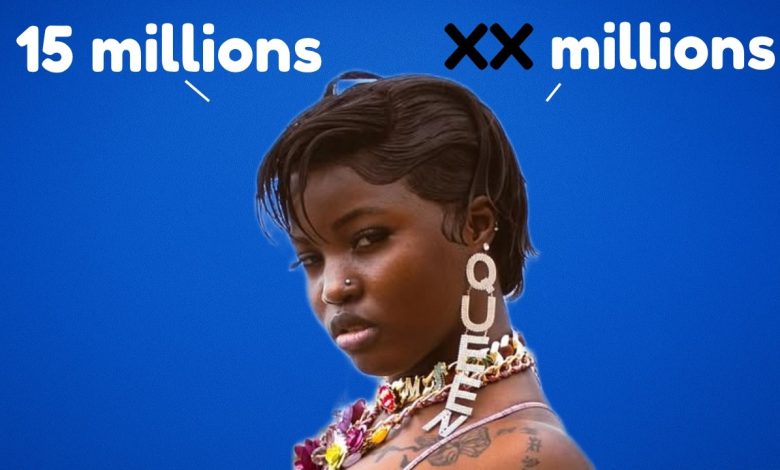
Ivorian artists and influencers have publicly mentioned offers of money in exchange for a night. Tobeh’s video looks at the issue through several statements, clips shared online and debates that have circulated in Côte d’Ivoire. Its central point is clear: beyond the amounts mentioned and the visibility of the personalities involved, these propositions raise questions of consent, pressure and power dynamics.
However, the subject should be approached with caution. The transcript combines testimonies attributed to women who spoke for themselves, the video creator’s interpretation, and rumours targeting other personalities. The latter do not constitute established facts: the women concerned reportedly did not confirm the allegations reported.
Testimonies about financial offers
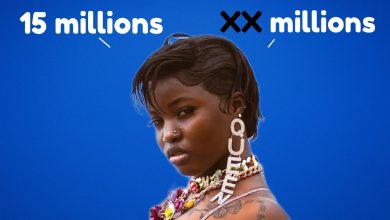
The video opens with a statement: a woman says she turned down 15 million CFA francs to “do things.” This clip serves as the starting point for a broader subject: celebrities, artists or influencers who are allegedly approached for sexual favours in exchange for money.
According to the video’s presentation, the women most frequently targeted are those whose image is highly visible: emerging artists, influencers or media figures. The creator particularly stresses physical criteria regularly highlighted in online discourse, such as a face considered attractive or so-called generous curves. This way of commenting on women is itself part of the context being denounced: their appearance is sometimes treated as though it could justify persistent propositions.
Queen Myiana, presented in the video as an emerging Ivorian artist and as the winner of the Urban Variety Breakthrough Artist of the Year award at PRIM 2025, is cited in this context. The creator believes that her recent status in the industry could expose her to people seeking to take advantage of her visibility. This is his analysis, not evidence regarding the identity or intentions of specific individuals.
An example of an offer made live
The video also mentions Claire Quadio, known as “the Pokou queen.” Tobeh says he came across one of her live streams and, in less than a minute, heard an offer of 700,000 CFA francs for a night with her. He states that he did not keep a recording of this clip, while considering that the episode illustrates the potentially recurring nature of this type of behaviour.
In his account, Claire Quadio rejected the offer. This example primarily shows how easily certain requests can be made in public or semi-public spaces, particularly during live broadcasts on social media. The sum offered does not change the nature of the request: the consent of the person being approached remains essential, and a refusal should not have to be justified.
Why is the issue more visible?
The creator places several reported cases in 2025, while noting that the phenomenon is allegedly not new. In his view, more frequent public statements can first be explained by a broader movement of speaking out on Ivorian social media.
He does not reduce this movement to feminist activism, although he acknowledges that women who testify may find a space there to speak out. Instead, he refers to a dynamic driven, among others, by cyberactivists and part of the public, who question the origins of spending considered significant and the possible networks of influence surrounding it.
This climate of suspicion nevertheless entails a major risk: turning questions into accusations without verifiable evidence. The video itself gives examples in which rumours targeted well-known women, linking their presumed lifestyle to paid sexual relationships. Yet without confirmation from them or evidence presented, these claims must remain at the rumour stage.
Rumours and accusations: an essential distinction
Kadi Touré is mentioned in connection with a car whose value is given in the video as 150 million CFA francs. After the vehicle was presented, internet users and a cyberactivist reportedly demanded explanations about how it was financed. Some posts then allegedly insinuated that she had taken part in the system described in the video.
The transcript provides no element capable of establishing this hypothesis. It is therefore essential not to present these insinuations as information. Publicly questioning a personality about their income or assets is not, by itself, enough to conclude that a sexual quid pro quo exists.
The same principle applies to reported claims concerning Carmen Sama. The video relays a scenario described by a cyberactivist, involving in particular trips to Dubai or Paris and the later involvement of another person. But the creator explicitly states that these are rumours, that no evidence is provided and that the women concerned have not confirmed them.
This distinction is fundamental. Denouncing propositions or abuses of power is one thing; attributing unproven acts to someone is another. Direct testimonies must be heard, while unsupported allegations must be handled with restraint.
Higher incomes, according to the video’s analysis
The second explanation put forward by Tobeh concerns the economic changes in showbiz and influencing. He believes that artists and influencers now earn a better living than they did ten or fifteen years ago. According to his analysis, substantial financial offers may therefore have seemed harder to refuse at a time when income from music, fame or partnerships was lower.
The video provides no numerical data to measure this change. It is the creator’s reading, based on his view of the industry. Nonetheless, it highlights a concrete issue: economic vulnerability can make any offer of money more burdensome, particularly at the beginning of a career.
The creator also mentions older influencers who were allegedly accused, without evidence, of accepting this type of arrangement. He notably cites Emma Lohoues as an example of a personality targeted by speculation. Once again, no accusation can be considered established without verifiable facts.
The case of Pédoxy and the voices of the women concerned
Pédoxy is also mentioned as an influencer who publicly stated that she had rejected an offer that could have reached 20 million CFA francs. In the excerpt mentioned, she explains her refusal through a dream recounted by a friend, in which accepting a large sum of money was followed by serious illness and her death.
The video notes that the matter had sparked reactions in Côte d’Ivoire. It also mentions an amount of 65 million that was reportedly cited in an interview, before being denied by Pédoxy, who reportedly said that her remarks had been misinterpreted. Finally, it reports that a woman gave her 100 million CFA francs to support her, according to her own statements.
These elements illustrate the need to report each claim in its context and with attribution. The amounts mentioned come from statements or accounts relayed in the video; they are not enough to establish a general rule about practices in the industry.
Beyond celebrities: power dynamics at work
Towards the end, the video broadens the topic. One speaker states that “sexual harassment by superiors” would not concern showbiz alone, but all sectors of activity. Another speaker points out that women who are visible, attractive or perceived as such draw looks and desire.
Perhaps the most important point is this: the propositions would not always come from outsiders. They could also come from people who hold influence over a career, a job, a concert or an opportunity for advancement. In such a situation, money is not the only leverage: the promise of a professional opportunity can create additional pressure.
The video concludes with the idea that some women, particularly when they are at the bottom of the ladder or in a situation of economic survival, may face deeply unfair choices. Without presuming individual cases, this reflection is a reminder that an offer is never trivial when it is made within a power imbalance.
FAQ
Are the rumours mentioned in the video confirmed?
No. The transcript states that the rumours targeting certain personalities, including Kadi Touré and Carmen Sama, are supported by no evidence presented and have not been confirmed by the women concerned.
Which testimonies are presented as direct?
The video relies in particular on statements attributed to women who say they rejected offers of money, as well as on the account of an offer heard during one of Claire Quadio’s live streams. However, the exact circumstances must be distinguished in each clip.
What is the main issue raised?
Beyond the amounts involved, the video questions consent and power dynamics, including when a professional opportunity or a situation of financial vulnerability is involved.
">La Seductrice
Follow on X
Send an email