TikTok in Africa: the request to “turn around” and the issue of hypersexualization
 ">La Seductrice
Follow on X
Send an email
">La Seductrice
Follow on X
Send an email
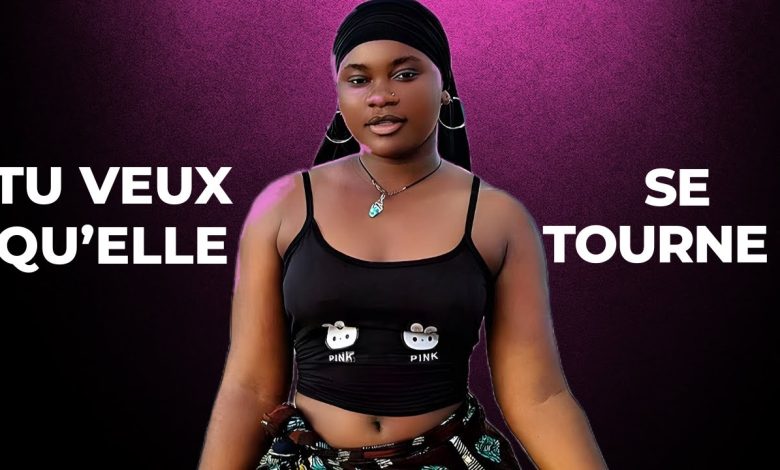
On TikTok, one comment regularly appears beneath some women’s videos: an injunction to “turn around,” in other words, to turn around or show more of their figure. In his video, Tobeh draws on clips that have gone viral, notably reactions from Ivorian female creators, to question this habit. Behind a phrase often presented as a joke, he identifies a repeated request that places creators’ bodies at the center of attention.
The video does not claim to establish how many women publish this type of content, nor what proportion of platform users they represent. Instead, it focuses on a mechanism: insistent comments, the pursuit of views, the appeal of popularity, and the very different choices creators make when faced with this pressure.
Why does the request to “turn around” come up so often?
Tobeh refers to an easily identifiable request in TikTok comments: users ask a woman to turn around so they can see her body from another angle. According to him, this request is particularly common in the exchanges he observes around content posted by African women.
He cites Mio’s reaction, described in the transcript as one of the leading Ivorian influencers. During a live stream, she does not let this type of remark pass and responds with irritation, then with humor in another clip. Her phrases subsequently become references repeated online.
This circulation turns the initial reaction into reusable audio or an expression. Users use it to mock comments deemed inappropriate or to highlight the repetitive nature of the requests directed at women. The video thus shows that humor can be used to expose a practice without necessarily making it disappear.
A joke that can also reveal pressure
The narrator acknowledges that these requests are frequently framed as jokes. But he believes it would be reductive to limit them to their humorous dimension. When the same request appears repeatedly, it can reduce a video, whatever its initial subject, to the physical appearance of the person who posts it.
From this perspective, the issue is not limited to an isolated comment. It concerns the accumulation of requests and the implicit idea that a creator should meet the visual expectations of part of her audience in order to keep their attention.
The video uses the term hypersexualization to describe this dynamic surrounding content in which the display of curves becomes an important element of visibility. In the transcript, this is not a statistical study of TikTok or a finding generalized to all female users. Tobeh primarily describes observed practices and the effects the platform can have on content choices.
Views, likes, and popularity: the mechanism described by Tobeh
According to the reasoning developed in the video, users ask for this type of clip because some creators already make it. Tobeh observes that videos centered on curves can quickly receive many views and likes, giving their creators significant exposure on the platform.
This visibility can then be perceived as an opportunity: to gain followers, access partnerships, generate income, or simply experience the satisfaction of a widely watched post. The narrator stresses this last point: for someone creating content, seeing views and interactions increase can be a major motivation.
He then proposes a pattern that he presents as a classic one. A creator starts by posting videos for fun, receives a few reactions, then comments tell her that people like her appearance. Demand gradually develops. If she responds to it, deliberately or by chance, she may notice an increase in views and likes. This result may encourage her to reproduce this type of post.
Tobeh thus describes a possible shift from an initially lighthearted post to content more focused on displaying the body. He expresses it in deliberately marked terms, contrasting initial shyness with more assertive exhibitionism. This is his interpretation of a platform mechanism, not a situation he attributes to all women on TikTok.
Not confusing visibility with a lack of choice
The video also emphasizes that some creators clearly reject this injunction. Tobeh notably mentions Mabou, whose clip shows a firm response to users asking her to turn around. She reproaches them for looking on TikTok for videos intended to arouse them and states that she will not wear certain outfits or dance to satisfy this request.
This passage is essential to the argument: women do not all react to comments in the same way. Some may choose to post content that highlights their bodies; others set boundaries, confront those making the remarks, or refuse to adapt their videos to such expectations.
Tobeh also specifies that he cannot state whether women who display themselves more are more numerous than those who do not, or the other way around. However, he argues that sexualized content or content centered on curves appears, in the examples he observes, to enjoy greater popularity than other types of content.
When a trend changes meaning
At first, the reactions and expressions popularized by Mio seem intended to mock comments asking women to turn around. They make it possible to highlight the insistence of some users and point out the inappropriate nature of these requests.
But Tobeh observes that as the phrase circulates, its initial meaning changes. Reused in videos and edits, it can itself become a trend device centered on the act of turning around. In other words, content created to criticize a practice can be repurposed in a context that reproduces or normalizes it.
This shift illustrates the ambivalence of trends on social media. A sound, a phrase, or a reaction can lose its original context when it is widely reused. Criticism, humor, and the pursuit of engagement then become intertwined within the same distribution codes.
What the video invites viewers to look at on TikTok
The main subject is not to judge individual creators who choose one format or another. Tobeh’s video instead draws attention to the environment surrounding their posts: insistent comments, rewards in the form of views, audience expectations, and the power of trends.
It also reminds viewers that the popularity of one type of content does not make it possible to conclude that everyone concerned supports it. Some creators respond to the demand, while others ignore or denounce it. Between these positions, motivations may vary and are not detailed for every case in the transcript.
By placing Mio’s reactions, Mabou’s refusal, and the typical path he describes side by side, Tobeh raises a broader question: what does a platform become when the attention given to certain videos relies heavily on showcasing women’s bodies? The video does not offer a single answer, but it invites viewers to consider what comments, likes, and trends truly reward.
FAQ
What does “turn around” mean in the TikTok comments discussed in the video?
In the context described by Tobeh, it is a request directed at a creator to turn around and show more of her figure or curves.
Does the video claim that all African female creators make this type of content?
No. Tobeh specifies that he cannot say whether women who display themselves more are more or less numerous than those who do not. He also shows creators who reject these requests.
Why might this content multiply, according to Tobeh?
The video links its spread to the pursuit of views, likes, followers, potential partnerships, income, and the satisfaction provided by high visibility.
">La Seductrice
Follow on X
Send an email