Pranks in Africa: When Wilson Prank Confronts Les Dégameurs with Their Own Concept
 ">La Seductrice
Follow on X
Send an email
">La Seductrice
Follow on X
Send an email
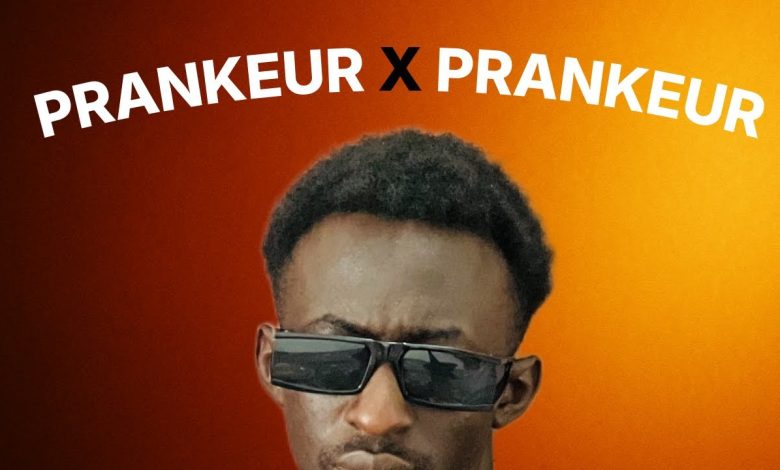
Pranks in Africa are becoming increasingly prominent on social media, with formats sometimes designed to strongly surprise the people being filmed. In his video, Tobeh looks back at a confrontation between Wilson Prank and Les Dégameurs, two creators associated with hidden-camera videos. The starting point is simple: Wilson Prank decides to take up Les Dégameurs’ concept by interfering with their meal, as they themselves do in some of their videos.
The sequence raises several questions: how far can a filmed joke go in a public space? Should someone who produces pranks accept being targeted themselves? And what role do preparation, staging, and informing participants play?
A prank format that can trigger strong reactions
Tobeh first places the subject in a broader context. According to his commentary, pranks can be seen as disturbing by people who did not ask for them. He also mentions a form of fatigue surrounding this type of content, including in the West, when the joke intrudes on the daily lives of passersby or customers.
The video cites several situations attributed to Wilson Prank: an insistent interaction with a woman, as well as a scene involving a supposedly lost phone and a warranty. The creator is portrayed as going far in provocation in order to trigger a reaction and, potentially, fuel the spectacular nature of his content.
On the other side, Les Dégameurs are known, notably in the clips mentioned, for a concept that involves approaching people who are eating in order to comment on the way they eat or take food from their plates. The process can quickly be experienced as an intrusion, particularly when it concerns a meal or personal space.
Wilson Prank takes up Les Dégameurs’ concept
The core of the video focuses on the moment Wilson Prank applies this principle to Les Dégameurs themselves. While they are in a restaurant, he approaches their table and criticizes the way they eat, explicitly referring to their own videos. The exchange becomes tense when he puts his hand into their plate.
In the footage shared, Les Dégameurs react strongly to this gesture. One of them notably points out that they do not know each other and that they are not “cousins,” a phrase that underscores the overly familiar and intrusive nature of the intervention. The situation is then stopped and apologies are offered.
For Tobeh, this scene illustrates the possible gap between producing a prank and being subjected to one. He notes that Les Dégameurs’ reaction does not appear to match the image of creators accustomed to provocative interactions. This interpretation remains the one developed in the video: the people involved provide another explanation.
Les Dégameurs say their videos are prepared
After the incident, Les Dégameurs explain that their content is scripted or prepared. They say that the people appearing in their videos are notified in advance and that the scenes are produced in an organized setting. According to them, this preparation makes it possible to create an interaction that remains natural on screen, while avoiding placing an uninformed person in an unexpected situation.
They therefore believe that Wilson Prank should have contacted them before filming them in a restaurant. In their version, he could have pitched his prank idea to them and they could have taken part in the staging. They also insist that they are not amateurs in the field and that they could have overseen the sequence.
This justification is a central element of the debate. If Les Dégameurs’ usual scenes are indeed prepared, they are not based on the same situation as the one experienced at the restaurant: Wilson Prank allegedly intervened without warning them. Tobeh’s video thus contrasts a prank presented as organized with an improvised action targeting creators who are nevertheless familiar with the genre.
A previous attempt with a similar outcome
Tobeh indicates that Wilson Prank may not have been the first person to try to make Les Dégameurs experience their own concept. Another creator is shown in a similar sequence: he asks for food, tries to take some, and triggers a verbal altercation. Once again, the people targeted eventually learn that it was a hidden-camera prank.
The repetition of these scenes, as reported in the video, raises the same question: can a concept that consists of disturbing someone while they are eating be reproduced without creating tension? The answer largely depends on the context, the relationship between the participants, and whether or not they have given their consent.
Consent and environment at the heart of the debate
In an exchange transcribed by Tobeh, Les Dégameurs are questioned about the people visible in the background of their videos and the possibility that they may be shocked. They reply that they gather information before carrying out their pranks and also mention, depending on the situation, the presence of security.
Their argument is that they do not choose their targets at random. They claim to seek information about who they are addressing before initiating a scene. However, the incident with Wilson Prank serves precisely as the opposite example in Tobeh’s analysis: he allegedly approached them without notifying them, which immediately triggered a defensive reaction.
When asked how they felt when Wilson Prank put his hand in their plate, they acknowledge that they had no particular relationship with him. The exchange then puts a direct question to them: does this experience allow them to understand what the people targeted in their own videos may feel?
Les Dégameurs respond by distinguishing their way of working from Wilson Prank’s. They believe that his intention was to go viral and reiterate that their own videos rely on preparation. The video does not definitively settle this disagreement, but it shows that the line between humor, provocation, and perceived aggression can be very thin.
What this confrontation between prank creators reveals
This confrontation is not only about a plate or a sequence that went viral. It sheds light on the mechanisms of prank videos: seeking a reaction, capturing attention, and creating an unusual situation. But it also reminds us that a person’s reaction cannot always be anticipated, especially when they have not been informed that filming is taking place.
The case of Wilson Prank and Les Dégameurs, as presented by Tobeh, therefore contrasts two approaches. On one hand, a surprise intervention that literally takes up a known concept. On the other, creators who maintain that their scenes are supervised and prepared. The contrast between these two versions is the essence of the debate raised by the video.
FAQ
Why did Wilson Prank target Les Dégameurs?
According to Tobeh’s video, Wilson Prank took up their prank concept by addressing them during their meal and interfering with their plate. He reportedly wanted to make them experience a situation similar to those they show in their content.
Are Les Dégameurs’ videos real or staged?
Les Dégameurs state in the excerpt that their pranks are scripted or prepared, and that the people involved are informed beforehand. This claim is reported by the video.
What is the main issue raised by this sequence?
The sequence questions the limits of pranks, particularly the consent of the people filmed, the preparation of scenes, and the difference between organizing a hidden-camera prank and being targeted without warning.
Video source: A video by Tobeh: When prank creators get in each other’s way in Africa
">La Seductrice
Follow on X
Send an email