Money Offers for a Night: Testimonies from Ivorian Showbiz
 ">La Seductrice
Follow on X
Send an email
">La Seductrice
Follow on X
Send an email
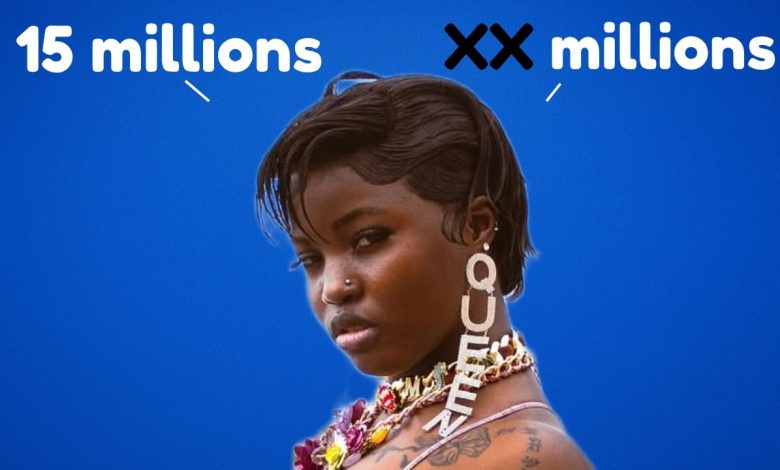
Ivorian artists and influencers have publicly reported receiving money offers in exchange for a night or intimate favors. In the source video, these statements are placed in the context of Ivorian showbiz, social media, and the rapid spread of sometimes unverified allegations.
The issue is not limited to the celebrity or physical appearance of the women concerned. The video also raises the question of power dynamics, particularly when offers may come from people who could influence a career, a contract, or access to certain professional opportunities.
Testimonies of rejecting financial offers
The video opens with a reported statement: a woman allegedly turned down 15 million CFA francs to “do things.” She also mentions an offer including a trip to Dubai, travel expenses, and an amount that could reach, according to the reported remarks, 20 million CFA francs.
These accounts are presented as an illustration of a phenomenon in which female public figures, particularly artists and influencers, receive intimate solicitations accompanied by financial offers. The people targeted are often highly visible online or on television.
The video notably mentions Queen Myiana, presented as an emerging Ivorian artist who was recently named Urban Variety Breakthrough Artist of the Year at the PRIM 2025 awards. Her newcomer status in the industry is mentioned as a factor that could make her more exposed to certain approaches.
It also mentions Claire Kadiou, known as Queen Pokou. The narrator says he came across one of her live streams and heard, in less than a minute, an offer of 700,000 francs for a night. He states that he did not keep a recording of the exchange, but maintains that Claire Kadiou refused.
A topic discussed more publicly in 2025
According to the analysis developed in the video, testimonies and discussions surrounding these offers appear to have gained visibility in 2025. However, the narrator does not present the phenomenon as new: rather, he believes that the women concerned now have more space to speak about it publicly.
He links this development to a broader movement of calling out such issues in Côte d’Ivoire, particularly on social media. Cyberactivists and internet users are said to question certain spending patterns or displays of wealth attributed to public figures.
This dynamic can encourage people to speak out about the practice of exchanging money for intimate favors. But it also carries a significant risk: that suspicions or comments may be turned into public accusations without supporting evidence.
The need to distinguish testimonies from rumors
The video discusses the case of Kadi Touré, a host, producer, and actress, following the presentation of a car said to be worth 150 million CFA francs. Internet users and a cyberactivist then voiced suspicions about the origin of this purchase.
These remarks are reactions and accusations cited in the video, not established facts. No evidence is provided to link this car to any system of financial offers in exchange for a night.
The narrator also reports rumors concerning Carmen Sama and trips abroad. He explicitly stresses that nothing proves these claims and that the women concerned have not confirmed them. This distinction is essential: an online rumor does not constitute a fact.
When a subject concerns the private lives, reputations, and financial resources of identifiable people, the lack of evidence should call for the greatest caution. Direct testimonies can be reported as such; unconfirmed assumptions and accusations must remain presented as rumors.
A longstanding reality in a sector that was long precarious
The video offers a second explanation for the issue’s current visibility: artists and influencers are now said to earn a better living than they did ten or fifteen years ago. The narrator recalls that, in his view, it used to be difficult to make a living from music or influencing in Côte d’Ivoire, even after achieving local success.
In this more fragile economic context, money offers could appear particularly significant and more difficult to refuse. This is not to claim that women accepted them, but to highlight the potential effect of financial insecurity on how such solicitations are viewed.
The narrator also recalls that women in the industry had already been accused in the past without evidence. He mentions Emma Lohoues as an example of a public figure targeted by this type of comment. The reference serves here as a reminder that media exposure can fuel speculation that does not necessarily rest on established facts.
Past statements and personal motivations
The video also cites Pédoxy, who allegedly said that she had turned down as much as 20 million CFA francs offered by a wealthy man. The reason for her refusal, as reported, was linked to a disturbing dream had by a friend: the friend allegedly saw Pédoxy receive a large sum from a white man before becoming seriously ill.
This account is presented as a personal and specific explanation, not as a general rule. The video also states that an amount of 65 million CFA francs was attributed to her in a Senegalese interview, information she allegedly denied, citing a misinterpretation of her remarks.
Finally, she allegedly said that she had received 100 million CFA francs from a female admirer who wished to support her. These statements are reported in the video as remarks attributed to the person concerned.
The role of power dynamics in the professional environment
Beyond stories involving well-known figures, the video broadens the topic to the issue of advances linked to professional power. One contributor states that “sexual favors in exchange for professional advancement” are not limited to showbiz, but exist in different sectors of activity.
The problem becomes particularly concerning when the offer does not come from an outsider, but from someone who can influence the course of a career. A promise of a concert, a contract, or professional advancement can then create intense pressure, especially for someone starting out or economically dependent on that opportunity.
The video therefore invites viewers to see the statements of well-known women as a reminder of the situation that may be experienced by less visible women. It does not make it possible to measure the exact scale of the phenomenon, but it highlights testimonies, perceptions, and a debate that exists publicly in Côte d’Ivoire.
FAQ
Are all the accusations mentioned in the video proven?
No. The video distinguishes between testimonies or statements attributed to the people concerned, on the one hand, and rumors or suspicions spread online, on the other. For some of the names mentioned, it itself specifies that no evidence is provided.
Why does the topic appear to be more visible today?
According to the narrator, the increased visibility can be explained by women speaking out, the activity of cyberactivists, and debates over public figures’ spending. This is an analysis expressed in the video.
Would the phenomenon concern only showbiz?
One contributor cited in the video believes that power dynamics and sexually suggestive offers also exist in other sectors. However, the video focuses primarily on the artistic industry and influencing in Côte d’Ivoire.
">La Seductrice
Follow on X
Send an email