Female bisexuality: when social acceptance remains conditional
 ">La Seductrice
Follow on X
Send an email
">La Seductrice
Follow on X
Send an email
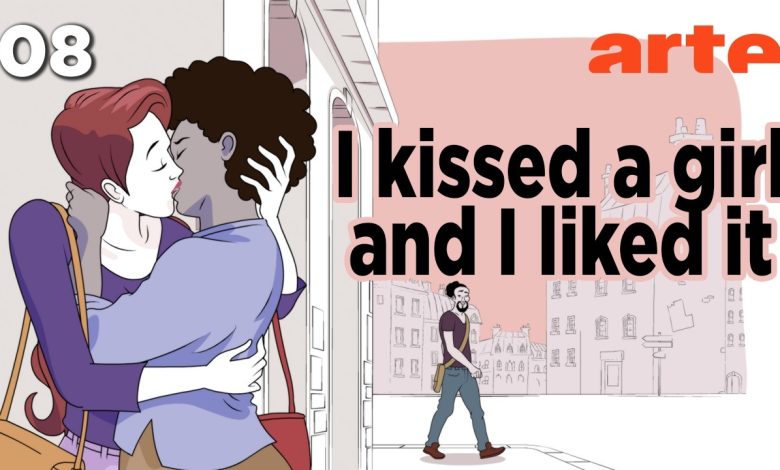
Is female bisexuality really more accepted, or merely tolerated when it feeds certain fantasies? That is the central question raised by this episode of Libres!, broadcast by ARTE. Drawing on the chorus “I kissed a girl,” the video highlights a discrepancy: two women kissing may be seen as provocative, attractive or amusing in certain contexts, while relationships between women remain exposed to homophobia and male bisexuality remains heavily stigmatized.
The point is not to dictate an orientation or a way of living one’s sexuality. On the contrary, it reminds us that sexual freedom requires being able to choose one’s relationships, experiences and words, without having to conform to a trend, a fantasy or an outside expectation.
Visibility that can conceal sexualization
The video begins with pop figures and staging in which female singers kiss other women. These images may give the impression that female bisexuality has become widely accepted. But according to the commentary, this visibility is frequently constructed to be watched and validated by heterosexual men.
In this context, attraction between women is not always considered in its own right. It sometimes becomes an element of seduction intended to attract attention, arouse desire or spice up a situation. The video thus describes conditional acceptance: it exists as long as female bisexuality remains compatible with a male fantasy.
This distinction is essential. The visibility of an orientation does not automatically guarantee its recognition. A representation may appear liberating while reducing the people concerned to a spectacle or a sexualized image.
This reflection is in line with the need to be wary of generalizations about women and their desires. The article devoted to the difficulty of answering the idea that all women are the same reminds us that an individual experience or media representation cannot define an entire group. Orientation, boundaries and desires cannot be inferred from either a stereotype or a scene seen on screen.
Female bisexuality, acceptable only in certain scenarios
The transcript notably refers to so-called libertine dating ads, in which many women describe themselves as bisexual while their male partners describe themselves as strictly heterosexual. Above all, it highlights the framework in which this bisexuality is accepted: often a group encounter, with a man present or involved.
This idea can also be linked to Why do women get annoyed when they are complimented?, which details useful mechanisms for better understanding this situation.
The issue raised is therefore not the existence of these practices, which are a matter of the choices of the people involved. It concerns the implicit injunction: female bisexuality is more readily permitted when it serves as an addition to male desire, rather than when it expresses autonomous desire between women.
The video also links this logic to pornographic content featuring women together, presented as being widely consumed by men. Here again, it questions the boundary between chosen sexuality and a representation designed above all to meet an external demand.
In any intimate situation, the decisive point remains each person’s consent and respect for their boundaries, regardless of their gender or orientation. This idea is developed in our article on creating consensual sexual intimacy based on attentiveness and respect. An orientation is never a general invitation, nor an obligation to accept a particular experience.
Why male bisexuality remains more taboo
The contrast is one of the video’s strongest themes. While kisses between women can be turned into a commercial argument or a fantasy, attraction between men is presented as far less socially acceptable. The commentary therefore wonders how a popular song about a kiss between men would be received.
In the scene referred to in the transcript, two men even consider a sexual act with each other while trying to present it as a simple “favor between buddies,” while insisting that they are not gay. The sketch points to the discomfort, denial mechanisms and fear of labels that can surround male bisexuality.
The video therefore formulates an asymmetry: female bisexuality may receive a form of validation, but sexualized validation; male bisexuality, meanwhile, is still more likely to be perceived as a transgression. In both cases, people are not fully free if they must adapt their behavior to what is considered desirable, acceptable or masculine.
Bisexual, pansexual or without a label: the right to define oneself
The transcript states that some women prefer to use the term “pansexual” because the word “bisexual” seems too strongly associated with pornography. In the explanation given, pansexuality refers to the possibility of being attracted to people regardless of their gender.
This passage does not establish a hierarchy between the terms. Rather, it shows that words carry social imagery and that everyone can seek the wording that suits them best. Defining oneself, changing terms or rejecting all labels is part of a personal journey.
This caution also applies to budding relationships. Trying to obtain an answer, a declaration or an experience that the other person does not want can create pressure. On this subject, the article on the limits of trying to convince someone to date you reminds us that a relationship cannot be built on insistence. Interest and consent must be mutual.
Freedom also includes the right not to experiment
The video’s conclusion broadens the notion of sexual freedom. Being free does not mean having to multiply experiences or feeling obliged to kiss a person of the same gender in order to seem modern, open-minded or desirable. It means being able to have a relationship with whomever one wishes, without homophobia or biphobia, but also being able not to want one without being devalued.
To extend this reflection, our analysis devoted to Why you should not chase after a woman: 4 essential reasons to know provides additional insight and helps place this point in a broader perspective.
This reminder responds to another form of pressure: the kind that makes experimentation a compulsory step or a sign of modernity. Strict heterosexuality should not be mocked as a lack of boldness, any more than bisexuality, homosexuality or pansexuality should be reduced to a form of entertainment.
Ultimately, the video criticizes not so much the visibility of female bisexuality as the conditions under which it is made visible. The message is clear: orientations are neither trends, nor accessories of seduction, nor performances intended to reassure or excite others. They belong to the people who live them.
FAQ
What does the video denounce about female bisexuality?
It criticizes an acceptance that is often conditional, when attraction between women is valued mainly because it feeds heterosexual male fantasies.
Does the video contrast bisexuality and pansexuality?
No. It states that some people prefer the term “pansexuality” because they consider the word “bisexuality” to be too closely associated with pornography. The definition cited links pansexuality to attraction to individuals regardless of their gender.
What is the final message about sexual freedom?
Sexual freedom includes the right to have relationships with people of the same gender without facing homophobia or biphobia, but also the right not to want to experiment without being judged.
Video source: I kissed a girl and I liked it | Libres! | ARTE.
">La Seductrice
Follow on X
Send an email