The JP N’da Case and Discourse About Foreigners in Senegal: What the Video Raises
 ">La Seductrice
Follow on X
Send an email
">La Seductrice
Follow on X
Send an email
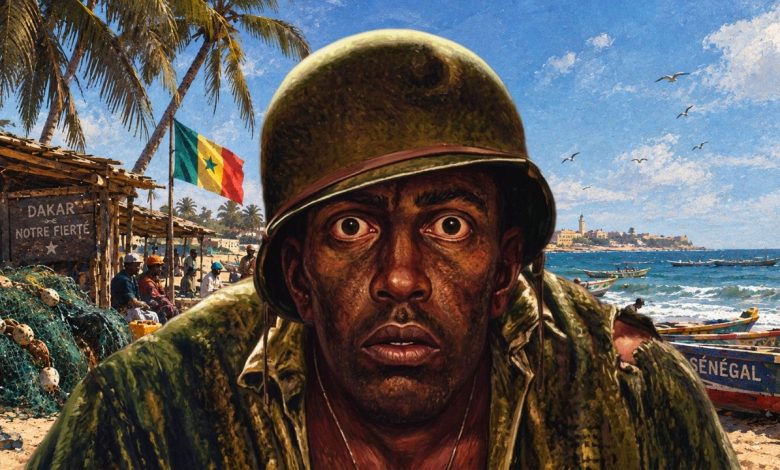
A video published by Tobeh examines the situation of foreigners in Senegal through a specific case: that of Ivorian influencer JP N’da. The commentary begins with an alleged altercation involving a woman named Salimata, before broadening its focus to the discourse circulating on social media about immigration, regularization and respect for Senegalese laws.
The video does not determine the facts of the case. Instead, it presents several accounts, while offering personal criticism and interpretations of the online climate. It is therefore essential to distinguish between the reported allegations, the positions of the people mentioned and the video author’s comments.
The case involving JP N’da and Salimata
According to the presentation in the video, JP N’da, described as an Ivorian influencer, is said to be in prison in Senegal following a case in which he is accused of hitting Salimata. Tobeh states that a conflict allegedly took place between JP N’da’s group and hers.
The version reported as Salimata’s is that of an assault: she notably claims that she was hit, that she saw her phone thrown to the ground and that she was subjected to a humiliating situation. She also mentions an injury and explains that she called the police after the incident.
The video also reports a version attributed to JP N’da’s side. In this account, Salimata allegedly disrupted the group’s stay and began filming them without their consent. JP N’da is said to have tried to retrieve the phone; the physical contact mentioned in this version may have involved her hand.
These two accounts do not align. The transcript provides no information that would make it possible to establish with certainty how the altercation unfolded. The video therefore addresses the case as an example of how an incident involving a foreigner can quickly take on a public and emotional dimension.
Respect for the law as a central point of discussion
The central point developed by Tobeh is the following: a foreign person staying in a country must respect its laws. In the case discussed, the author emphasizes that anyone present in Senegal, regardless of nationality, must avoid conduct that is contrary to the law or local rules.
The video also relays statements from Senegalese people that are not presented as hostile to foreigners in general. Rather, they call for people in an irregular situation to regularize their status and for those who commit illegal acts to be prosecuted in accordance with the law.
This distinction is important in the debate described: calling for the country’s rules to be enforced does not automatically amount to rejecting all foreign presence. However, Tobeh believes that the way certain messages are worded or repeated can shift the discussion toward the stigmatization of entire communities.
Concerns about rhetoric targeting foreign communities
The video refers to a movement described as a minority one, but sufficiently visible to provoke reactions. Some of the statements cited specifically target Guinean nationals and link their presence to various everyday issues, such as the use of public space, unsanitary conditions or irregular situations.
Tobeh points out that such generalizations are problematic: according to this reasoning, acts that may be blamed on individuals cannot justify calling an entire community into question. On this subject, the video reports the intervention of a person addressing the Guinean Embassy in Senegal and asking that the mistakes of certain nationals not be used to accuse all Guineans.
The transcript also mentions condemnation of the increase in xenophobic acts and remarks by human rights organizations, including Amnesty International and the Senegalese Human Rights League. According to the statements reported, these organizations call for Senegal’s tradition of hospitality to be preserved.
Authorities’ call to avoid exclusionary rhetoric
In the video, Tobeh refers to a statement attributed to Interior Minister Mouhamadou Makhtar Cissé in Tivaouane. He is said to have called on Senegalese people to welcome foreigners who respect the country’s laws.
The position attributed to President Bassirou Diomaye Faye is also summarized: rhetoric that excludes or divides would not reflect Senegal’s values. The video also highlights the reminder that many Senegalese people themselves live abroad and that teranga, often associated with Senegalese hospitality, must be put into practice.
These institutional positions appear in the video as a response to the polarization of the debate. They advocate a framework that combines respect for the law with the rejection of rhetoric that indiscriminately targets foreign populations.
When political debate fuels emotion
A large part of Tobeh’s commentary focuses on the mechanics of political discourse. The author believes that political movements also rely on collective emotions. In the case of rhetoric focused on foreigners, he considers that this dynamic can encourage resentment, or even contempt, toward people designated as responsible for national difficulties.
The video does not deny that issues of border control, regularization or law enforcement can be debated. However, it argues that these topics can become dangerous when individual responsibility is turned into accusations against an entire group.
The commentary notably takes issue with a form of double standard: certain behaviors would be tolerated when committed by nationals, but would become intolerable when attributed to foreigners. This is an interpretation put forward by Tobeh, rather than a finding supported by data in the transcript.
An individual case within a broader debate
The JP N’da case is presented as the starting point for a more general reflection. The video does not make it possible to conclude that this case sums up the attitude of the Senegalese population toward foreigners. It also includes several reminders of statements defending welcome, coexistence and mutual respect.
Rather, the issue raised is that of everyone’s responsibility in a tense context: respecting the law of the country where one is staying, avoiding generalizations targeting a nationality and not turning individual controversies into conflicts between communities.
Through this commentary, Tobeh primarily warns of the risk that legitimate debates about administrative status, rules of collective life or security may drift into exclusionary rhetoric. The video therefore calls for distinguishing criticism of specific behavior from the stigmatization of foreigners as a group.
Frequently asked questions
What is JP N’da accused of in the video?
The video reports that he is accused of hitting Salimata during a conflict between their groups. JP N’da’s side puts forward a different account, related to retrieving a phone. The transcript does not make it possible to verify or determine which version is accurate.
Does the video claim that Senegalese people are xenophobic?
No. Tobeh refers to rhetoric and a movement described as a minority one, while also reporting numerous Senegalese and institutional statements opposing xenophobia and supporting the welcoming of foreigners who respect the law.
What is the main message concerning foreigners in Senegal?
The commentary emphasizes respect for the country’s laws, while warning against generalizations and rhetoric that attributes to an entire community acts blamed on certain individuals.
Video source: A video by Tobeh: POV: You are a foreigner “in the wrong” in Senegal (JP N’da)
">La Seductrice
Follow on X
Send an email