Witchcraft in Africa: beliefs, doubts and the consequences of accusations
 ">La Seductrice
Follow on X
Send an email
">La Seductrice
Follow on X
Send an email
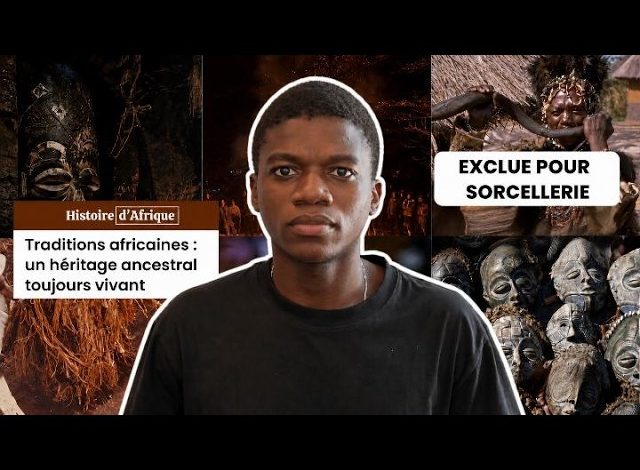
Witchcraft in Africa is a subject that brings together spiritual beliefs, traditions, family stories and collective anxieties. In his video, Tobeh does not claim to provide a definitive answer to the question of whether it exists. Instead, he focuses on the stories, practices and, above all, the effects that accusations can have on the lives of those concerned.
His starting point is personal: as a Christian, he says he believes in the existence of spiritual forces, while still having doubts about many cases presented as witchcraft. This tension between faith, questions and caution runs throughout his discussion.
What do we mean when we talk about witchcraft?
The term “witchcraft” covers very different realities depending on the context. The video points out that it can be used to refer to ritual, mystical or esoteric practices. Some are associated with traditions and religions, such as voodoo, which Tobeh distinguishes from a simple notion of evil magic.
The word can also carry a strongly negative connotation, particularly when it is used to explain an illness, a death, a failure or behaviour considered strange. In these situations, the person identified as a witch is often portrayed as being responsible for a misfortune affecting the family or community.
Tobeh therefore highlights the importance of vocabulary. Systematically calling someone a “witch” can reduce complex cultural practices to a moral or religious accusation. In the video, he clarifies that his use of the term mainly refers to situations in which a person is attributed harmful acts or supposedly dangerous powers.
Practices that raise questions
Several sequences mentioned in the video show practices interpreted as evidence of witchcraft. Among them is the custom of a coffin supposedly identifying those responsible for a death. According to the accounts reported, a coffin carried by several people would move towards a suspected person.
The video also mentions scenes in which brooms are allegedly used to identify a thief. Suspects sit down while a man handles brooms described as spiritual. When a broom grips one of their necks, the gesture is interpreted as identifying the guilty person.
Faced with these images, Tobeh expresses reservations: he questions both the mechanism behind these demonstrations and the reaction of the people targeted. He notes that fear, group pressure and the belief that one is confronting a spiritual force can influence a confession. However, he does not present this hypothesis as a certainty.
Testimonies, dreams and the influence of those around us
The testimonies of people who say they have practised witchcraft are among the most troubling elements mentioned in the video. Some adults recount having been involved from childhood in events they associate with spirits, nighttime gatherings or the deaths of relatives.
Children also appear in clips cited by Tobeh. They sometimes give detailed accounts and claim to have taken part in acts of witchcraft with other members of their family or social circle. These statements raise questions for the video creator rather than leading him to a conclusion.
In particular, he asks about the influence of words repeatedly spoken around a child. When a child is suspected at a very early age, called a witch or exposed to constant stories about the subject, can they eventually internalise that identity? Can they interpret their dreams through that belief? Tobeh raises this possibility without denying, in his own words, the spiritual dimension in which he believes.
Dreams hold an important place in these accounts. Some people regard what happens in them as an experience of the spiritual world. The video also points out that dreams can be influenced by the concerns, fears and thoughts of everyday life. Here again, the question remains open.
When a belief becomes an accusation
The core issue addressed by Tobeh is less about whether or not it is possible to believe in witchcraft than about the consequences of accusations. An accused person may be isolated, rejected by their relatives or expelled from their village. The video particularly discusses the fate of older women, sometimes singled out after a death, as well as children labelled “witches.”
The clips mentioned show children rejected by their families and living with the label of witch. Some say they do not understand why they were accused. For Tobeh, these situations show that the issue goes far beyond a theoretical or religious discussion: it directly affects safety, dignity and family ties.
The video also cites cases in which people have been targeted as part of collective rumours. It mentions vampire hunts in Malawi, the burning of the home of a woman accused after the Ivorian football team’s defeat, and the violence suffered by people with albinism in certain countries. These examples are presented to illustrate how far the identification of a supposed culprit can go.
The role of authority figures and people who promise to “deliver” others
Tobeh criticises people who, in his view, may exploit fear of witchcraft to gain money, influence or recognition. He refers to religious leaders or practitioners who claim to detect witches, recognise signs or offer deliverance.
His question is simple: in the absence of an objective, verifiable method for identifying an accused person, the risk of error is considerable. An accusation may then depend on the interpretation of an individual claiming to possess a particular ability.
The video is not intended to deny religious or spiritual beliefs. Instead, it invites viewers to distinguish personal faith from the use of fear against vulnerable people. For Tobeh, a belief should not prevent people from questioning the mechanisms of accusation or the interests of those who profit from them.
A question with no definitive answer
Throughout the video, Tobeh refuses to present himself as the holder of a truth. He repeatedly says that he does not know. He considers both the possibility that certain phenomena are interpreted through a widely shared belief and the possibility that the accounts refer to a spiritual reality that he himself does not claim to understand.
But his final message is clear on one point: whatever people’s beliefs may be, witchcraft accusations have real consequences. When someone is excluded, humiliated, stripped of their possessions or exposed to violence, the issue can no longer be treated as a simple mysterious story or online entertainment.
The reflection offered is therefore about collective responsibility. How can we listen to accounts and respect beliefs without turning doubt, fear or misfortune into a condemnation of a person? The video does not deliver a verdict on witchcraft in Africa, but it calls for the harm caused by accusations to be taken seriously.
FAQ
Does the video claim that witchcraft exists?
No. Tobeh explains that he still has doubts and will not give a definitive answer. He presents different hypotheses related to beliefs, dreams, social pressure or the interpretation of certain events.
Why are witchcraft accusations concerning?
Because they can lead to isolation, family rejection, expulsion or violence against those accused. The video particularly emphasises the situation of children and women identified as witches.
Are all traditional practices equated with witchcraft?
No. The video points out that some practices belong to traditions or religions. Tobeh stresses that the word “witchcraft” can be reductive and pejorative depending on the context in which it is used.
">La Seductrice
Follow on X
Send an email