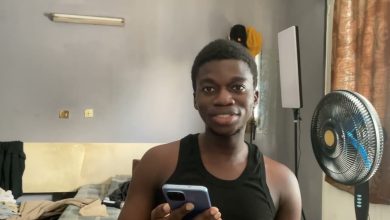
Cameroonian music and explicit lyrics: Tobeh’s critical perspective
 ">La Seductrice
Follow on X
Send an email
">La Seductrice
Follow on X
Send an email
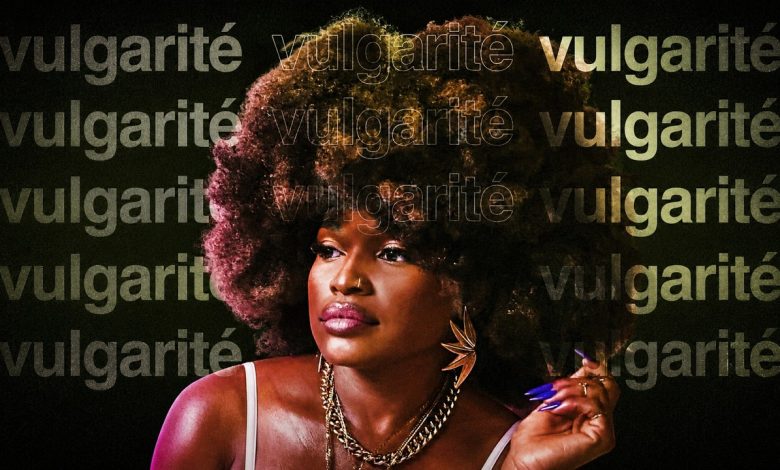
In a video with a direct tone, Tobeh looks at what she presents as a strong presence of vulgar or sexually explicit lyrics in part of Cameroonian music. Her comments do not concern all of the country’s musical output: she focuses on tracks, excerpts, and uses observed online, particularly on TikTok.
The video creator, who states that she is Ivorian, adopts an unapologetic, humorous, and critical style. From the outset, she frames her intervention as a personal observation: according to her, vulgarity in music exists everywhere, in Africa and elsewhere, but certain Cameroonian artists stand out for a level of explicitness that she considers particularly pronounced.
What Tobeh means by “vulgarity”
In her comments, Tobeh does not reduce vulgarity to swear words. She mainly emphasizes very direct sexual references, explicit descriptions, and suggestive sounds or staging incorporated into certain tracks. It is this lack of subtlety in the lyrics that draws her attention.
She acknowledges that sexually themed songs exist in many African countries and broadly cites artists from different music scenes. However, she believes that the Cameroonian songs she discusses go further in their wording and in the way they make these themes immediately noticeable to listeners.
Her reasoning is therefore less about the existence of adult themes in music than about how they are treated: in her view, an allusion can remain implicit, whereas certain tracks she mentions would opt for a blunt form of expression, sometimes accompanied by moaning or unambiguous imagery.
Popular tracks that surprise her
Tobeh notably mentions Takala VIP and Vit as examples of artists or tracks that stood out to her. She reacts to several lyric excerpts heard in their songs, without hiding her surprise at their explicit nature. She presents them as tracks that are highly visible and widely reused in Cameroon’s digital ecosystem.
Her surprise also stems, according to her, from the reception of these works. The video creator says she sees influencers, as well as people whose public image seems usually more reserved to her, using these tracks or taking part in associated challenges. She compares this dynamic with her perception of Côte d’Ivoire, where she believes songs regarded as too explicit would be less readily shared by certain content creators.
This comparison remains her personal point of view. It is not based on distribution, sales, or audience data. The video relies above all on her observations of content published online and on her experience as a listener.
TikTok, a showcase for viral music
For Tobeh, TikTok plays a central role in the current circulation of these songs. She describes the platform as an important showcase for Cameroonian music online, where short excerpts, choreography, lip-syncs, and reaction videos give tracks new visibility.
She notes that some internet users seem to appreciate the energy, rhythm, and catchiness of the tracks, even when they do not understand all the lyrics. In several videos she says she watched, she observes a recurring reaction: users praise a track’s musicality while implicitly advising people not to focus too much on its verbal content.
This separation between melody and lyrics is one of the aspects that interests Tobeh most. In her view, a track’s infectious quality can encourage people to reuse it, including when its lyrics contain wording she considers inappropriate. Virality would then depend as much on the atmosphere as on the precise meaning of the words.
A critique that also targets normalization
Beyond the songs themselves, Tobeh questions what she perceives as a normalization of such content. She says she is surprised to see women from different generations using or promoting certain tracks mentioned in her video. She also reports having seen a concert sequence in which part of the audience appeared to react enthusiastically, while other people seemed more reserved.
Her question is not intended to establish a general rule about Cameroonian audiences. Rather, she expresses her incomprehension at the success of certain choruses and the diversity of people who share them. This reception, as she describes it, gives her the impression that explicit sexual references have become more readily accepted in some of the musical and social content she follows.
She also mentions Charlotte Dipanda, not to attribute the same codes to her, but in contrast with the artists she considers more explicit. In her video, this reference serves to illustrate the coexistence of very different styles within the Cameroonian scene.
The memory of an older trend
Tobeh does not present this phenomenon as entirely new. She recalls a period when music videos circulated more widely through music channels, before streaming platforms became widespread. She says she remembers Cameroonian songs that were already highly suggestive at that time.
She cites, among others, tracks associated with Malingo, emphasizing that some lyrics, in her interpretation, were already directly sexual. She also mentions a song connected to Francis Ngannou, which she sees as a revealing example: even in a track designed as support or a tribute, she believes the artist found a way to introduce a sexual dimension.
These references allow her to argue for the idea of stylistic continuity, at least in the selection of tracks she knows or has rediscovered. However, they are memories and impressions expressed in an opinion video, not an exhaustive analysis of Cameroonian music.
Festive music, dance, and a double reading of lyrics
The video creator then compares this trend with other French-speaking music scenes. She admits that explicit songs also exist in Côte d’Ivoire, Gabon, and Congolese music. She notably mentions lyrics whose meaning may be less immediately understood when they are performed in another language, before a clearer French expression changes the listener’s perception.
According to her, openly suggestive tracks sometimes serve a festive or choreographic function: they can accompany a dance, a challenge, or a party atmosphere. However, she believes that in the Cameroonian examples she cites, this dance-oriented logic is not enough to explain the omnipresence of sexual lyrics. Her conclusion is deliberately provocative: she considers that certain artists would rely above all on explicit content and sonic energy.
She nevertheless ends on a broader observation: in French-speaking African music, suggestive content is not exclusive to one country. Her video mainly stands out for the emphasis it places on Cameroon, which she describes as particularly striking in the examples she selected.
FAQ
What is the main subject of Tobeh’s video?
The video addresses the place of explicit sexual lyrics in certain Cameroonian tracks, as well as their reuse on social media and in influencer content.
Does Tobeh claim that all Cameroonian music is vulgar?
No. She relies on specific artists, tracks, and excerpts. She also acknowledges that vulgarity or sexual references exist in the music of many countries.
Why is TikTok mentioned in the video?
Tobeh presents TikTok as a space for visibility and reuse for the Cameroonian songs she comments on, notably through challenges, short videos, and internet users’ reactions.
">La Seductrice
Follow on X
Send an email