Light Skin in Africa: Understanding Colorism and Its Effects
 ">La Seductrice
Follow on X
Send an email
">La Seductrice
Follow on X
Send an email
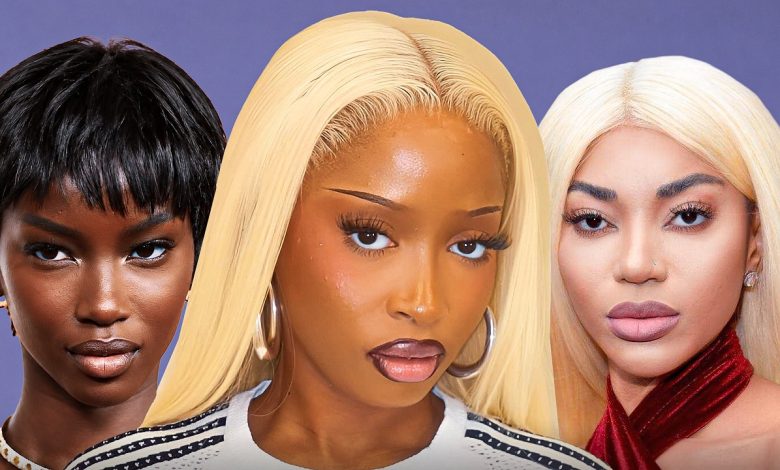
Why is light skin so often associated with beauty in certain African contexts? In his video, Tobeh directly addresses this question through the concept of colorism. His point is not that a dark-skinned person is systematically considered unattractive. Rather, he describes a particular, sometimes automatic, valuing of the lightest skin tones.
According to the creator, this implicit hierarchy influences the way people are viewed, compliments, dating choices, media representation, and the way some people perceive their own skin. The video therefore invites viewers to distinguish an individual preference from a broader social phenomenon, passed on and sustained through images, habits, and discourse.
When light skin becomes a criterion for social value
To introduce his topic, Tobeh imagines the portrait of a woman who meets many physical criteria commonly considered attractive: hairstyle, eyes, eyebrows, nose, or lips. In his deliberately exaggerated scenario, men’s interest collapses as soon as it is specified that the woman has dark skin.
The example is meant to illustrate a central idea: the problem may not necessarily be a total lack of attraction to dark-skinned Black women, but the greater enthusiasm shown toward light-skinned women. The video creator believes that many men may claim to appreciate dark skin tones, without that appreciation always being visible in their behavior or in the collective standards they perpetuate.
He mentions a study, without providing its source or specific context, according to which 54% of the men surveyed would prefer light-skinned women, compared with 42% who would prefer women with darker skin. He himself qualifies this result by pointing out that the selection of photographs shown may influence responses. This caveat is important: in the video, this figure is mainly used to open up a discussion, not to establish a general conclusion.
Colorism: discrimination within the same community
Tobeh defines colorism as a phenomenon in which people within the same community see themselves, or are seen, as superior to others because of their skin color. He emphasizes its most common form: a social preference for light-skinned people at the expense of those with darker skin.
From this perspective, colorism is not limited to saying, “I prefer a certain physical type.” It becomes a broader mechanism when it shapes opportunities, compliments, access to visibility, or perceptions of beauty. The video creator compares it to a form of discrimination within Black communities, while acknowledging that personal tastes cannot be entirely erased.
The nuance he highlights is this: a preference may exist, but it does not emerge in a vacuum. It can be influenced by repeated representations and by an environment in which certain skin tones are more often associated with beauty, success, or desirability.
The role of images and representation
The video looks back at the influence of films, television, advertising, music videos, and social media. Tobeh explains that he grew up with images in which the girl presented as the prettiest or most popular was often light-skinned, while people with darker skin were less prominently featured.
He also cites well-known figures from American music as illustrations to show how certain representations can leave a lasting mark on collective imagination. For him, the observation is simple: when only one type of skin tone receives most of the positive visibility, the beauty standard eventually shifts in that direction.
The video creator believes that changes have been made in Western countries, notably through more visible representation of dark-skinned women in campaigns, films, and artist choices. He does not present this as a definitive solution, but as a response to the lack of visibility that existed for a long time.
A reality felt in several African countries
Tobeh’s discussion is rooted mainly in his experience and in what he says he observes in West Africa. In particular, he recounts receiving “congratulations” from a stranger for his Black skin. For him, this apparent compliment reveals a deeper problem: it assumes that keeping or embracing dark skin would be an act of resistance against a society that idealizes lighter skin tones.
He also mentions Lomé, where, according to an account shared in the video, light-skinned people are said to be more highly regarded and listened to. These claims are based on experiences and observations cited in the video; they are not presented as statistical data about all the populations concerned.
The creator also mentions South Africa. He says that, through certain content seen online and music videos, he had the impression that light-skinned people were overrepresented there. After trying to understand the issue better, he says he realized that this perception did not necessarily reflect the actual diversity of the population. He also reports accounts describing colorism as particularly harsh in the country, linked to suspicions directed at dark-skinned people, who are wrongly assumed to be undocumented immigrants.
The consequences for self-esteem
The most troubling point raised in the video concerns the effects of this valuing on the people affected. Tobeh believes that teenage girls and women may internalize the idea that being lighter-skinned would make them more beautiful or desirable. According to him, this pressure can contribute to feelings of insecurity and lead some people to want to lighten their skin.
He concludes with a stark statement: women may regret having damaged their skin while trying to alter their complexion. This assertion is made as part of his personal analysis and his concern about the normalization of these practices.
The video also points out that very dark-skinned men can be targeted by mockery, particularly during childhood and adolescence. Tobeh recalls having a very dark-skinned friend who was subjected to recurring jokes, such as those about darkness or the idea that he could no longer be seen when the lights were off. He acknowledges having taken part in such teasing at the time, while specifying that he never considered his friend less handsome because of his skin.
Personal preference or conditioned norm?
Tobeh does not claim to impose on anyone what they should find attractive. He repeatedly says that he respects individual preferences, including when someone is more attracted to lighter skin tones. But he questions the origins of these preferences when they appear to align with the same social, media, and cultural model.
For him, recognizing the existence of colorism is already an essential step. It makes it possible to understand that judgments about beauty are not always purely spontaneous: they can be shaped from childhood by the images people see, the people who are valued, and the comments they hear every day.
His message ultimately turns toward future generations. He believes the problem is already deeply entrenched, but that more discussion, representation, and critical distance can help prevent the same skin-color hierarchies from being reproduced.
FAQ on colorism in Africa
What is colorism?
In the video, colorism refers to discrimination or a hierarchy based on skin color within the same community. Light-skinned people are often valued more than those with darker skin.
Does colorism affect only women?
No. Tobeh focuses primarily on the consequences for women, especially in beauty standards, but he also discusses the mockery and treatment faced by some very dark-skinned men.
Can a preference for a skin tone be separated from colorism?
According to the discussion developed in the video, a preference can be personal. However, it can also be influenced by a context in which lighter skin tones are more widely represented and more socially valued.
">La Seductrice
Follow on X
Send an email