Mixed Couples and Romantic Preferences: Deconstructing Generalizations About Black and White Women
 ">La Seductrice
Follow on X
Send an email
">La Seductrice
Follow on X
Send an email
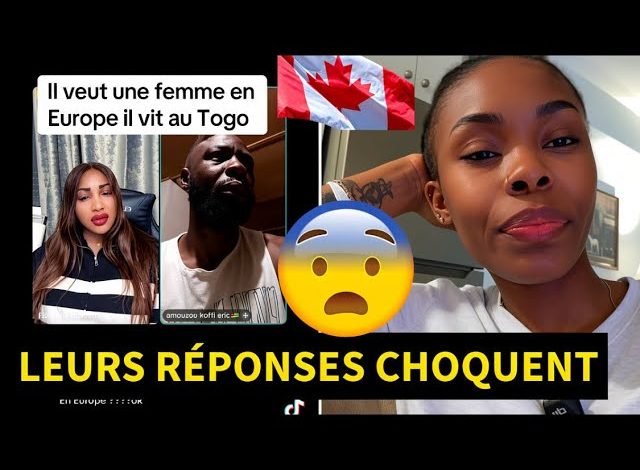
Why do some Black men say they prefer White or mixed-race women? The question raised in the video elicits very different answers. Several participants mention support within a couple, material expectations, family pressure, or the search for a different life. Others mainly point out that no background can sum up a person’s personality, intentions, or ability to love.
This is precisely the main issue in the debate: individual experiences are often turned into general judgments about Black women, White women, or Black men. Yet the video itself presents contradictory views, including among those giving testimony.
Testimonies contrasting support and material expectations
Several men interviewed portray White women as simpler, more sincere, or more willing to support a man who does not yet have financial stability. They contrast this view with that of Black women, whom they describe, in their own words, as being more attentive to income, status, or what a partner can provide.
To explore this point further, our article on Being the Second Choice in Your Relationship: Understanding This Relationship Fear provides useful context and a broader perspective.
However, these claims are not presented as established facts in the video: they reflect the perceptions and experiences of the people making them. One participant, in particular, links his wish to meet a woman living in Europe to his disappointment with his past relationships in Togo. Another refers to his personal journey to explain that he felt more understanding from a White partner.
The financial issue therefore runs through much of what is said. Some men explain that they feel strong pressure to have already “succeeded” before being considered desirable partners. This theme echoes the idea that having sufficient resources before being loved can become a major obstacle in relationships.
When a relationship becomes a shared building project
In the transcript, some participants contrast two ways of viewing a relationship. The first would consist of waiting for a partner who is already established. The second would be based on building together, by supporting someone before they achieve their goals.
This analysis can also be compared with Money and Male Worth: Why Some Men Push Love Away, which examines this issue in greater detail.
To extend this reflection, our analysis devoted to How to meet people when you are shy: 7 keys to overcoming your fear and approaching a woman naturally offers additional insight and places this point in a broader perspective.
One witness describes two very different experiences involving gifts: in the first case, he says he went into debt to give expensive presents and was then criticized when he could no longer afford to do so. In another, he states that a partner understandingly accepted his inability to give a gift at Christmas. These accounts illustrate his feelings, but do not make it possible to attribute an attitude to an entire community.
The debate also raises a broader question: should a person’s worth be confused with their income or level of success? The article on a man’s worth beyond his income points out that financial difficulties, expectations, and each person’s responsibilities are better discussed than used to devalue a partner.
Family pressure mentioned by some participants
Another explanation put forward in the video concerns family. According to some participants, African women or women from African families may be under pressure to help their relatives, send money, or favor a partner who is already able to meet material obligations.
This analysis can also be compared with Do You Need Money to Be a High-Value Man? A Discussion About Financial Pressure in Love, which examines this issue in greater detail.
This hypothesis is expressed as an interpretation of the context by the people speaking. It does not justify derogatory remarks aimed at Black women, nor does it make it possible to claim that all of them have the same expectations. One participant points this out: some women want to build with their partner, while others prefer a man who is already established. She adds that these choices may also be linked to past disappointments or to the fear of investing in a relationship without guarantees.
The issue of obligations toward relatives also appears in this debate on money transfers and family expectations in the diaspora. Without equating the two situations, this perspective helps explain why money, mutual support, and independence can weigh on certain relationship paths.
Personal preference or collective disparagement?
The distinction is essential. A romantic preference belongs to individual freedom: everyone can be attracted to someone without that person’s background automatically determining the nature or value of that attraction. Several people in the video express this more calmly: they prioritize chemistry, respect, and a feeling of peace in the relationship rather than skin color.
However, the problem begins when this preference is accompanied by the systematic disparagement of a group. One participant specifically criticizes men who enter relationships with White women while attacking Black women on social media. She directs the same criticism at women who disparage Black men.
This view invites us to distinguish between two things: saying that a past relationship did not meet one’s expectations, and claiming that all people sharing a background have the same flaws. In a relationship, listening, behavior, plans, boundaries, and reciprocity matter more than stereotypes.
The risk of reducing love to a social strategy
Some passages explicitly link relationships to the possibility of leaving a difficult situation or gaining access to another life. Men living in Africa mention the idea of meeting a European woman and then getting married. In these excerpts, the relationship is sometimes considered both in terms of feelings and of mobility or material security.
To explore this point further, our article on Money and Male Worth: Breaking Free from Financial Pressure in Love provides useful context and a broader perspective.
The video does not settle this question. Rather, it shows that the motivations attributed to others are often oversimplified: a woman is said to be with a man for his money, or a man with a woman to change his life. Yet the testimonies presented are not enough to establish a general rule.
A balanced relationship does not necessarily require both partners to have the same means or the same history. It does, however, require being able to discuss financial expectations without turning the other person into a provider, a project to be made profitable, or a solution to one’s difficulties. This issue of dialogue is also addressed in this article devoted to financial pressure and listening within a couple.
Choosing nuance over opposition
The video brings together words that are sometimes harsh and sometimes nuanced. It features men who feel judged based on their situation, accounts of romantic disappointments, and criticism of expectations perceived as materialistic. But it also contains a necessary reminder: neither Black women, nor White women, nor Black men form homogeneous groups.
Romantic preference can exist without ranking people. Likewise, seeking material stability can be an individual choice without defining all women in the same group. The most constructive point in the debate is probably the call to stop collective attacks, acknowledge the diversity of people’s paths, and put respect back at the center of relationships.
FAQ
Can romantic preferences be explained by background?
The video provides no evidence to support this claim. Participants express personal experiences and opinions, sometimes very different ones. Attraction and the choice of a partner depend on many individual factors.
Along the same lines, Sending Money to Africa: Why Some Young People in the Diaspora Want to Stop offers additional insights for understanding the subject.
Do all Black women expect a financially established man?
No. This idea is put forward by some participants, but one participant explicitly qualifies it: she states that some women want to build together, while others prefer a partner who is already stable.
Why can financial pressure weaken a relationship?
When someone feels that they are evaluated mainly on their income, they may experience fear, frustration, or the feeling of not being valued for who they are. Clearly discussing each person’s expectations and constraints can prevent this pressure from turning into conflict.
Video source: Black Men Say Why They Prefer White Women on YouTube.
">La Seductrice
Follow on X
Send an email