Burkina Faso and TikTok: viral styles, coaching and shock content analyzed by Tobeh
 ">La Seductrice
Follow on X
Send an email
">La Seductrice
Follow on X
Send an email
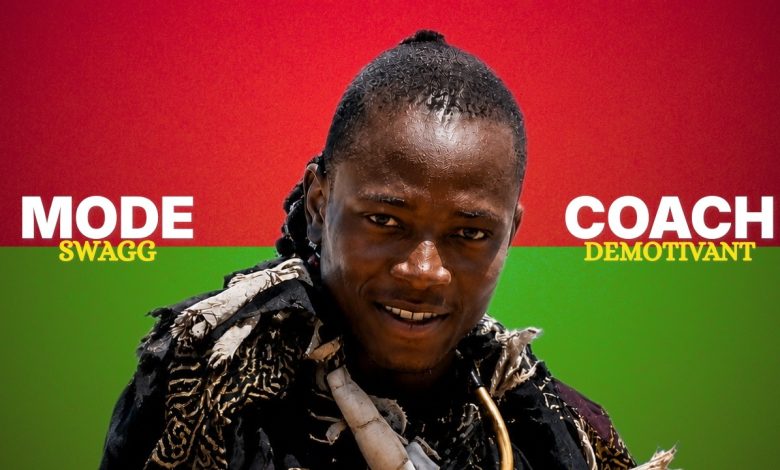
In this video, Tobeh looks at several pieces of content encountered on TikTok and associated, to varying degrees, with Burkina Faso. His focus is mainly on the staging codes adopted by certain creators: highly curated outfits, motivational messages, displays of success and videos designed to provoke an immediate reaction.
The video does not claim to paint a general picture of the country or its inhabitants. Rather, Tobeh reacts to viral posts and personalities visible on social media. He also makes it clear that one of the creators discussed has not been identified with certainty as Burkinabè.
Bold outfits at the heart of viral videos
The first sequence discussed concerns groups of people showcasing their way of dressing. Tobeh describes this phenomenon as a form of movement centered on “drip,” style and “swag.” The videos feature outfits that are sometimes simple, but often very colorful and particularly showy.
What catches his attention is the use of eye-catching accessories, especially light-up shoes. He also notes the importance given to color combinations. In the clip included in the video, the people interviewed, for example, present a combination dominated by red and black, with a touch of white, as a deliberate rather than random choice.
In the sequences shown, this approach to clothing goes beyond appearance alone. Style is connected to confidence, charisma and the ability to stand out. Some participants present their clothes as a personal signature, or even as proof of their superiority in a symbolic competition with other members of the scene.
Style as self-assertion
Tobeh highlights the contrast he sees between these looks and his own aesthetic references. He notably compares their energy to an earlier era, while observing that the people filmed fully embrace their choices. His commentary is that of a critical observer: he wonders what motivates some people to go out wearing such conspicuous outfits.
Nevertheless, the clips reveal a logic of self-promotion. The participants do not speak only about clothes: they mention “vision,” personal strength and the idea that they have created their style from the very beginning. In this world, appearance becomes a language intended to draw attention and establish a presence.
Tobeh also notes that this content sparks positive reactions in the comments he mentions. He sees messages of pride, encouragement and divine protection, sometimes accompanied by images of the Burkinabè flag. He wonders what exactly is being celebrated, while acknowledging that this question may lead to disagreements.
Tapsoba Business and the promises of personal development
The video then focuses on Tapsoba Business, presented by Tobeh as a young creator of motivational content. His videos draw on familiar personal development themes: focusing on one’s goals, working on one’s own future rather than criticizing others, fighting for oneself and remaining determined.
In the clips shared, Tapsoba Business stresses the importance of ambition. He states in particular that many people say they want to succeed or become rich, but that few would truly be prepared to make the necessary efforts. His message is aimed especially at young people, whom he accuses of wasting time commenting on other people’s lives.
Tobeh nevertheless expresses reservations about his legitimacy. In his view, the videos give the impression that the creator dispenses advice without having demonstrated that he himself has reached the level of success he promises his audience. He also reports ironic comments received by Tapsoba Business, with some internet users believing that a coach should also listen to the advice given to him.
Training courses, success and caution regarding commercial messaging
The most sensitive point raised by Tobeh concerns the commercial aspect of the content. He says that people who give advice on lifestyle, self-improvement or success often offer training courses, and believes that Tapsoba Business fits into this logic. He also mentions videos showing outward signs of luxury, such as a private jet, high-end cars or a hotel in Dubai.
These elements are presented in the video as part of an image of success. However, Tobeh does not confirm the creator’s actual financial situation. On the contrary, he says that he did not find, in the videos he watched, any statement that would allow him to say with certainty that Tapsoba Business is wealthy.
He more strongly criticizes a clip in which the creator claims that school almost destroyed his life. In this sequence, Tapsoba Business contrasts school with more personal paths to success and portrays the school system as a framework imposing pointless norms. Tobeh believes that this type of message may be harmful to young viewers who might take it seriously.
This part of the video recalls an important limitation of online motivational content: an inspiring phrase or luxurious staging alone does not make it possible to assess the relevance of the advice given. Tobeh’s video provides no information that would make it possible to verify the training promises mentioned; above all, it criticizes how they are presented and their potential impact.
Shock content and the pursuit of visibility on TikTok
Finally, Tobeh discusses Abd Skater, another creator discovered in TikTok videos. He explicitly states that he initially thought he was Burkinabè, but found no evidence establishing that origin. This case should therefore not be presented as representative of Burkina Faso.
According to Tobeh, the creator publishes numerous videos intended to shock, notably by throwing himself into garbage or gutters. He interprets this approach as a search for visibility. Since the creator does not speak in his videos, Tobeh observes that the content can be understood and watched beyond a single linguistic or national space.
The video mentions an account with 100,000 followers on TikTok. Tobeh believes that this number does not justify the health risks, the image projected or the possible consequences of such staging. He also says that he does not know whether these videos earn money for their creator.
His concern also relates to the creator’s age, whom he describes as a 16-year-old teenager, as well as the apparent participation of friends in more recent videos. Without providing further information about his entourage or situation, Tobeh questions the responsibility of adults and relatives in the face of this public exposure.
A critique of the mechanisms of virality
Beyond the individuals mentioned, the video examines the mechanisms that allow certain content to spread. Extravagant outfits catch the eye; success narratives promise transformation; shocking scenes trigger reactions. These three approaches share the pursuit of visibility, each in its own way.
Tobeh adopts a mocking and critical tone, but his guiding thread remains the question of what internet users value and share. The clips analyzed mainly show how self-assertion, displayed ambition and provocation can become content formats on TikTok.
FAQ
Does the video claim that all the creators featured are Burkinabè?
No. Tobeh associates several pieces of content with what he saw on Burkinabè TikTok, but he specifies that he has no proof that Abd Skater is Burkinabè.
What is the main criticism directed at Tapsoba Business?
Tobeh questions the legitimacy of his advice, notably because it may be connected to paid training courses and because he considers some messages, including his criticism of school, potentially problematic for a young audience.
What theme connects the different pieces of content discussed?
The pursuit of visibility on social media: through clothing style, promises of personal success or the production of shock videos.
Video source: A Tobeh video: The Weird People of the Internet: Burkina Faso Edition.
">La Seductrice
Follow on X
Send an email