Interracial couples: romantic preferences, support and generalizations in a debate about Black and white women
 ">La Seductrice
Follow on X
Send an email
">La Seductrice
Follow on X
Send an email
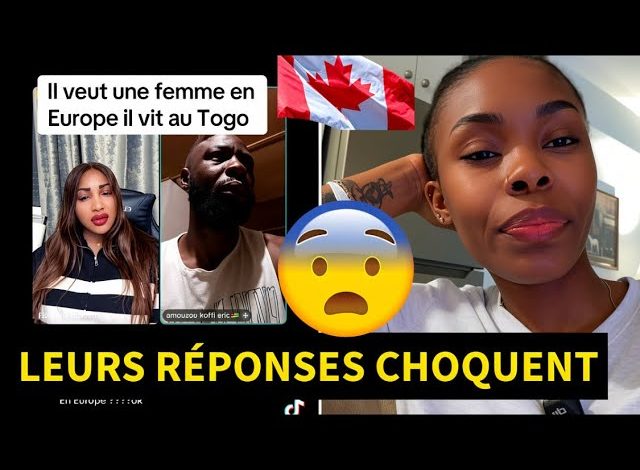
Why do some Black men say they prefer white or mixed-race women? The source video brings together a wide range of views on this issue. The speakers discuss the division of household tasks, support during difficult times, financial expectations, family pressures and relationship experiences.
However, these remarks are mainly based on testimonies, perceptions and generalizations. The compilation therefore cannot establish a truth about Black women, white women, Black men or interracial couples. Instead, it highlights relationship frustrations and sometimes contradictory views of love.
Criticism over investment in the relationship
In a first excerpt, a speaker addresses African or Black men whom she accuses of being more attentive to their white partners than to their Black partners. She describes men who would take a greater part in housework and childcare in one relationship, yet leave these responsibilities to their partner in another.
This analysis can also be compared with Being the Second Choice in Your Relationship: Understanding This Relationship Fear, which examines this issue in greater detail.
Her remarks also concern infidelity and the lack of consideration she attributes to certain male behaviours. She then asks a direct question: before denouncing a partner’s lack of respect, does a man himself respect the woman he lives with?
This passage does not describe all relationships. Nevertheless, it raises a concrete issue: the perception of an imbalance in domestic, emotional or parental efforts. This subject echoes the reflection developed in our article on the feeling of making all the effort in a relationship. When one partner feels alone in carrying the daily burden, the discussion can quickly turn into a conflict over recognition and respect.
Skin colour presented as a criterion of desirability
Several participants say they observe a preference among some Black men for white, mixed-race or light-skinned women. One of them considers this situation sad and associates it with colonisation. Another says he has heard men praise a woman because she is “light skin.”
Conversely, one speaker points out that attraction should not be reduced to skin colour. According to him, what matters is the connection with the person, regardless of their background. This nuance is important: acknowledging that certain preferences are expressed in testimonies does not mean presenting them as universal, natural or shared by everyone.
The video thus presents a sensitive debate: when does an individual preference become a discourse that devalues a group of women? The risk arises when personal experiences are turned into a sweeping judgment about Black women or white women.
Financial and emotional support at the heart of the stories
A significant part of the discussion concerns money. Some of the men interviewed say they are looking for a partner who would support them while they have not yet achieved their goals. Based on their own experience, they contrast white women, whom they perceive as more willing to support a man at the beginning of his journey, with Black women, whom they describe as more demanding regarding financial stability.
To explore this point further, our article on Mixed Couples and Romantic Preferences: Deconstructing Generalizations About Black and White Women provides useful context and a broader perspective.
This idea can also be considered alongside Should you have money to be a man of value? A discussion about financial pressure in love, which details useful mechanisms for better understanding this situation.
These claims are challenged in the video. One speaker points out in particular that there are women who build with their partner during difficult times. She also mentions a concern voiced by some women: investing time, money and energy in a relationship, only to be left by a man once he has succeeded.
Another testimony recounts two contrasting Christmas experiences. In the first, the man says he was criticised for a gift he considered modest after previously going into debt to give more. In the second, he explains that another partner would have understood his lack of financial means. These stories illustrate personal experiences; they are not enough to assign a single mindset to a community.
The question of personal worth linked to income goes far beyond interracial couples. This reflection on the financial pressure felt by some men in relationships helps place the debate in a broader context: the idea that one must be financially established to deserve love can fuel fear of judgment and prevent honest dialogue.
Family pressure, bride price and expectations surrounding success
In the compilation, speakers link material expectations to family. One of them claims that some African women or women from African families are expected to support their relatives financially, which would influence their romantic choices. Another criticises the pressure he associates with bride price and family demands.
This analysis can also be compared with Do You Need Money to Be a High-Value Man? A Discussion About Financial Pressure in Love, which examines this issue in greater detail.
There is also discussion of people living in Africa who imagine that a relationship with a European woman could open the way to a different life. A man living in Togo explains that he is looking for a woman in Europe because he says he has had bad experiences with women he perceives as being interested in money.
These segments show how economic and family constraints can be interpreted in romantic life. However, they do not demonstrate that these constraints alone explain relationship preferences, nor that all families or all women have the same expectations.
Preferring someone without disparaging others
The video’s most nuanced conclusion is expressed by a speaker who recalls everyone’s right to freely choose their partner. A Black man may be attracted to a white woman, a Black woman or a woman from another background; a Black woman may have her own preferences. For her, the problem begins when these choices become a pretext for humiliating or attacking others on social media.
Along the same lines, Money and Male Worth: Breaking Free from Financial Pressure in Love offers additional insights for understanding the subject.
To extend this reflection, our analysis on how to meet people when you are shy: 7 keys to overcoming your fear and naturally approaching a woman offers additional insight and places this issue in a broader perspective.
She acknowledges that opportunistic people exist, but refuses to make this a characteristic of all Black women. She also points out that some Black couples succeed, as do interracial couples, without this justifying putting down one group.
This caution echoes our analysis of interracial couples and generalizations about Black and white women. Romantic preferences can stem from individual stories, encounters and sensibilities. They become more problematic when they are accompanied by sweeping accusations, hierarchies between women or contempt.
What this debate mainly reveals
The video does not provide a definitive answer to the question of romantic preferences. Instead, it reveals several tensions: the need to feel supported, the fear of being chosen for one’s money, the weight of family expectations, memories of difficult relationships and the feeling of not being respected.
The testimonies also show that the word “support” does not mean the same thing to everyone. For some, it means accepting a temporarily precarious financial situation. For others, it entails sharing responsibilities, fidelity, consideration and mutual trust. Without dialogue about these expectations, each partner may believe that the other is not doing enough.
FAQ
Does the video prove that Black men prefer white women?
No. It presents testimonies from people who describe or claim to observe this preference, but also voices that point out that attraction varies from one individual to another and should not be used to disparage a group.
To explore this point further, our article on Money and Male Worth: Why Some Men Push Love Away provides useful context and a broader perspective.
Are Black women described in the same way by all the speakers?
No. Some participants accuse them of placing too much importance on money or social status. Others specifically condemn this generalization and point out that there are women willing to build a relationship during difficult times.
What is the central point of these testimonies?
Beyond the racial issue, the participants mainly talk about support, respect, financial expectations, fidelity and how to build a relationship without reducing the other person to what they own or may be able to provide.
">La Seductrice
Follow on X
Send an email