African Pastors and Fake Miracles: What Tobeh’s Video Questions
 ">La Seductrice
Follow on X
Send an email
">La Seductrice
Follow on X
Send an email
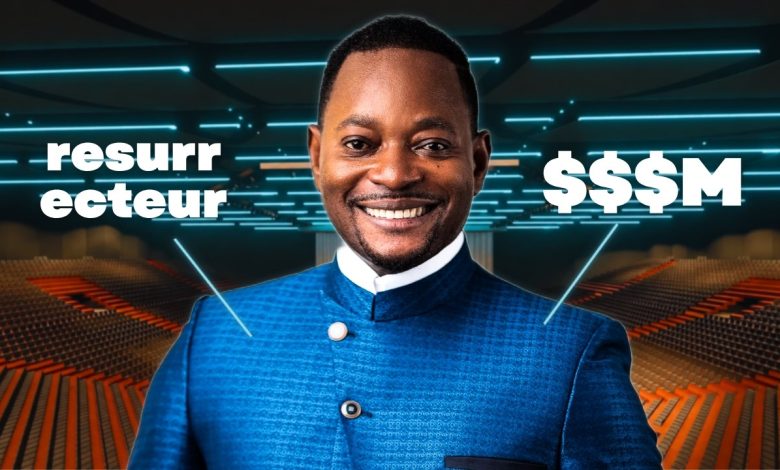
In his video, Tobeh addresses a subject he considers sensitive: the practices of certain African pastors, including healing demonstrations, prophecies and miracles presented before large congregations. His remarks are not intended to challenge all Christian beliefs. He also makes clear that he identifies as a Christian himself, while expressing many doubts about religious institutions and people who claim spiritual powers.
The video creator takes a satirical tone, but his central question is serious: how can a sincere experience of faith be distinguished from staging that may influence vulnerable believers? To illustrate his point, he mentions several behaviors observed in services and focuses at length on the case of Pastor Alph Lukau.
A Critique Intended to Be Distinct from Christian Faith
Tobeh begins by explaining his own relationship with Christianity. He says he believes in God and in the existence of Jesus, but explains that he does not unreservedly embrace all religious interpretations. In particular, he says he views the Bible as a text written, compiled and passed down by humans.
This personal position serves as the starting point for his critique. In his view, if a believer can already question certain religious messages or certain readings of texts, it is even more legitimate to maintain a critical perspective on claims made by contemporary preachers.
The video is therefore not an investigation into all African churches or all religious leaders. Rather, it focuses on media figures and on service sequences in which extraordinary claims are highlighted before an audience.
Three Levels of Spiritual Demonstration According to Tobeh
To structure his argument, Tobeh humorously describes three profiles of pastors that he believes can be found in certain African religious contexts. This classification reflects his commentary and is not an official typology.
Preachers and Spectacular Interpretations
The first level concerns religious leaders who, according to him, can captivate their congregation through their eloquence. He cites sermons that, for example, link poverty to an offense against God, or offer very loose explanations for ordinary phenomena.
The video creator mainly criticizes the authority granted to the phrase “God told me.” In his view, this expression can prevent any contradiction: when a statement is presented as directly inspired by God, believers may hesitate to question it.
He also mentions speaking in tongues, a practice found in certain Christian traditions. Without analyzing its theological role, Tobeh mocks the way this practice may be seen as proof of closeness to the Holy Spirit or as an ability to attain.
Physical Manifestations During Services
At the second level, the creator describes scenes in which spiritual power is supposedly manifested physically: falls, cries, body movements or collective behavior. He shows and comments on several clips of religious gatherings to emphasize what he perceives as the spectacular aspect of these sequences.
His perspective is clearly skeptical. He questions the boundary between religious fervor, group effect, staging and suggestion. However, the video provides no evidence that would allow a general conclusion to be drawn about all the people involved or all similar religious practices.
Announced Miracles and Healings
The third level is the one that concerns Tobeh the most: leaders who claim to bring about miracles, healings or immediate transformations. He emphasizes the emotional weight of these announcements, especially when they concern people who are ill, grieving or facing major financial difficulties.
For him, this is precisely where the risk becomes significant. A person hoping for healing or a solution to a painful situation may place complete trust in someone who presents himself as able to intervene in their life through divine action.
The Case of Alph Lukau in the Video
Tobeh presents Alph Lukau as one of the best-known African pastors. He notably revisits a sequence widely shared online, in which a man presented as dead is shown in a coffin before getting up during a religious event.
According to the video creator, this sequence was later described as staged by the people involved, and Alph Lukau also reportedly acknowledged that it was staged. This claim is reported by Tobeh in his video; the article has no independent evidence here to detail the context or the statements concerned.
The creator uses the sequence as an example of what he denounces: an event designed to impress, reinforce a pastor’s spiritual image and win over the public. He particularly mocks the acting visible in the clip and the way the miracle is turned into a spectacle.
Healings That Raise Doubts
The video also shows another service clip attributed to Alph Lukau. In this scene, a child with difficulty walking is brought before the pastor. After a prayer and an interaction with the child and his mother, the child stands up to the congregation’s applause.
Tobeh questions the authenticity of this demonstration. He points out elements he considers troubling, including the very convenient progression of the scene and the announced presence of a doctor. However, he specifies that he is not a doctor himself when commenting on the child’s physical condition in the clip.
The video creator also plays testimonies in English from people who say they were asked to play roles or follow a script during supposed miracles. Here again, these testimonies are presented in the video as incriminating evidence. They illustrate Tobeh’s argument that certain demonstrations may be organized to appear miraculous.
The Question of Money and Influence
Beyond miracles, Tobeh questions the wealth and lifestyle attributed to Alph Lukau. In the video, he mentions an estimated fortune, luxury vehicles, a residence in Johannesburg, large gatherings and travel accompanied by a motorcade.
This information is reported by the video creator and is not supported in the transcript by verifiable sources. It should therefore be understood as claims made as part of his commentary, rather than as established facts here.
Nevertheless, his question remains explicit: how can the accumulation of luxury goods be reconciled with a Christian ideal that he associates with a life detached from possessions? He specifically wonders what use very powerful or very expensive cars could have for a pastor.
The Risk for Believers According to Tobeh
The video’s conclusion goes beyond mockery. Tobeh believes that alleged fake miracles and spiritual promises can have significant psychological, financial and social consequences. He emphasizes people who come seeking hope after bereavement, illness or personal hardship.
His point is that a person’s faith should not become a lever for obtaining money, admiration or unlimited trust. He implicitly calls for discernment in the face of extraordinary accounts, without claiming that every religious practice or every church is manipulative.
FAQ
What is the main subject of Tobeh’s video?
The video criticizes miracle demonstrations, spectacular prophecies and the influence of certain African pastors. Alph Lukau is presented as the main example.
Does the video challenge Christianity as a whole?
No. Tobeh says he is Christian and distinguishes his personal faith from the practices of certain religious leaders that he considers problematic.
What does Tobeh criticize about alleged miracles?
He believes that some miracles may be staged and that these practices risk exploiting believers’ hope, suffering or trust.
">La Seductrice
Follow on X
Send an email