Begging and Success: Tobeh’s View of Some Young People in Côte d’Ivoire
 ">La Seductrice
Follow on X
Send an email
">La Seductrice
Follow on X
Send an email
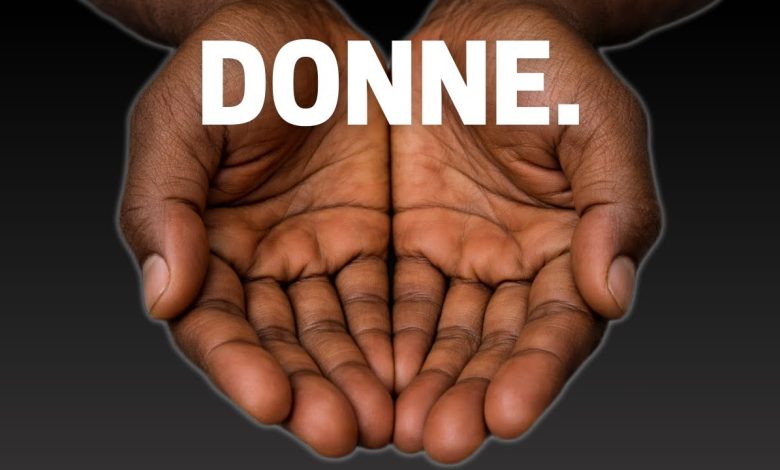
In his video, Tobeh examines a phenomenon he associates with part of Ivorian youth: the growing number of requests for money directed at people assumed to have the means. His comments are not limited to begging in the traditional sense. He also describes informal, sometimes persistent requests targeting artists, elders, motorists, or anyone identified as prosperous.
According to the analysis developed in the segment, this practice can appear to be a quick way to obtain money. It may be further encouraged when visible examples create the impression that asking, insisting, or going viral makes it possible to receive financial rewards.
A contradiction between begging and earning a lot
Tobeh starts from an observation he presents as paradoxical: begging is usually associated with lack and the need to ask those with greater resources. Yet, in the examples he comments on, it can be seen as an opportunity to earn large sums of money.
He notably mentions the case of a person who sang in front of a large community of young people and received, according to him, 3 million. For him, this type of scene can convey a problematic message: a young person may conclude that they too can earn a lot of money simply by asking others.
The video does not present this logic as a systematic economic necessity. Rather, it emphasizes the idea of a practice that has become familiar in certain contexts, to the point where those who engage in it may no longer necessarily see it as degrading.
Success perceived as a reason for requests
In Tobeh’s account, the appearance of success plays a central role. A nice car, for example, may be enough to suggest that a person has money. It then becomes an outward sign that attracts requests.
He describes a situation in which a young man clings to artist Imra’s car in order to get money. The episode is presented as especially revealing because the young man reportedly admitted that he did not know the artist. According to the comments reported in the video, a friend had merely told him that he was an artist with money.
For Tobeh, this example shows that a request is not necessarily based on admiration for a public figure or on a genuine connection with them. It can stem from a simple perception of wealth. The successful person then finds themselves exposed to repeated requests.
A “success tax,” according to the video
The video sums up this pressure with the expression “success tax.” It is not an official tax, but a phrase used to describe the social expectation that is said to weigh on people considered financially comfortable.
Tobeh also cites an interaction between Ivorian artists Rambal Junior and Did B. In this excerpt, a discussion about possessions, their value, and money turns into a direct request. The example is used to illustrate a culture of soliciting that can also exist among well-known people.
Another video testimony featured in the segment expresses the frustration of a person who says they are approached repeatedly, notably when arriving at a restaurant and while in their car. The reported comment raises a simple question: why do some people give the impression that money is easy to come by?
When insisting becomes a strategy
The videographer believes that some young people no longer see any reason to refrain. In his reasoning, when requests for money are frequent, socially tolerated, and sometimes rewarded, persistence may eventually be regarded as a normal strategy.
He comments on a viral video showing a group of children creating a lively atmosphere in order to get money from an elder. One of the children reportedly received something before hiding it, then continued to take part as though he had not yet received anything.
For Tobeh, what followed is significant: thanks to the buzz generated by the video, the child was reportedly able to ask for more money, including from celebrities. One person notably says they gave him 50 euros. In the videographer’s interpretation, this visibility reinforces the idea that soliciting can be profitable and repeated.
The issue of children and adult influence
The video then addresses a more sensitive dimension: situations in which children are sent to ask for money or encouraged to do so by adults. Tobeh says that, in his view, some parents encourage their children to lie or use this practice, including when they are not in a situation of extreme need.
Excerpts show adults talking about going to “ask” with children and giving instructions on how to proceed. The videographer also mentions children who claim to be ill in order to ask for help.
These scenes are treated in the video as a sign of transmission: beyond an isolated act, younger people may learn that asking strangers or elders for money is a common way of obtaining it.
Social media changing the form of requests
Finally, Tobeh believes that digital tools give this phenomenon a more modern form. His video suggests that social media, virality, and direct access to well-known people can facilitate requests.
In this context, buzz is not only used to entertain or make someone known. According to the argument developed, it can become a lever for attracting attention, addressing public figures, and asking for financial assistance.
Tobeh’s comments are therefore above all a critique of the normalization he observes. He connects several elements: the appearance of wealth, pressure directed at successful people, persistence in public spaces, the involvement of children in certain cases, and social media’s ability to amplify these behaviors.
FAQ
What is the main topic of Tobeh’s video?
The video addresses what Tobeh presents as the normalization of requests for money among some young people in Côte d’Ivoire, particularly toward people perceived as wealthy or successful.
Why does the video refer to a “success tax”?
In the video, this expression refers to the repeated requests faced by people with visibility, an expensive car, or an appearance of success.
What role does social media play in this analysis?
According to Tobeh, viral videos and online visibility can allow some people to multiply their requests for money to a wider audience, including celebrities.
Video source: A video by Tobeh: Ivorian youth like to beg: They are right.
">La Seductrice
Follow on X
Send an email