Beauty privilege in Ivory Coast: does appearance really influence opportunities?
 ">La Seductrice
Follow on X
Send an email
">La Seductrice
Follow on X
Send an email
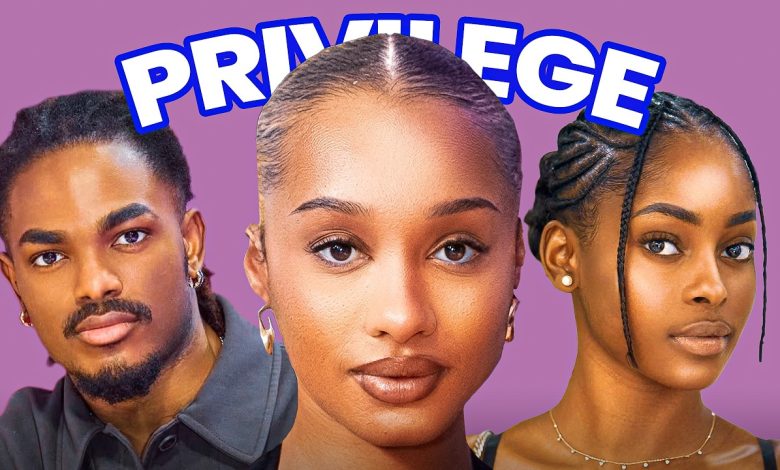
Beauty privilege, or privilege linked to beauty, refers to the idea that a person perceived as attractive may be received, judged or treated more favourably. In his video, Tobeh addresses this issue through everyday situations: social interactions, dating, recruitment, social media and the way people interpret someone’s qualities based on their appearance.
His point is not that every beautiful person would automatically succeed, or that work and skills would have no importance. Rather, he highlights that appearance can create an initial advantage: more attention, a better first impression or a more favourable disposition from others.
Beauty privilege: a perception that changes interactions
For Tobeh, it is difficult to deny that one may feel a particular pleasure when looking at someone considered beautiful or pleasant to look at. This reaction is not limited to an image seen online: in a real-life context, the environment, proximity and interactions can make this effect more visible.
The central question is therefore this: does this feeling actually change behaviour? The video creator believes it does. In his view, an attractive person is more easily perceived as likeable, interesting or worthy of attention, even before their personal qualities are truly known.
He presents this idea as a tendency that exists to varying degrees. Being beautiful does not guarantee an easy life or exceptional success. However, it may open doors or make certain interactions less difficult.
The example of Jeremy Meeks in the video
To illustrate his point, Tobeh mentions Jeremy Meeks, an American who was arrested in 2014 and whose mugshot went viral. In the account presented, his appearance prompted numerous reactions online, followed by the attention of a modelling agency after his release from prison.
The video creator uses this extreme example to show how appearance can transform the public perception of a person. His point is not that all attractive individuals will have a similar path, but that a valued appearance can, in some cases, create opportunities that might otherwise not have existed.
He also stresses an important distinction: modelling requires work, discipline and the ability to meet the industry’s demands. However, in his view, access to that opportunity itself largely stems from the attention received because of one’s appearance.
Appearance and the professional world: a decisive first impression?
A large part of the discussion focuses on work. Tobeh believes that beauty privilege can influence recruitment, including in technical professions where appearance does not seem to be an official criterion.
He notably recounts the case of a friend whom he describes as very attractive and who allegedly obtained a position at a major Paris bank even though he considered himself underqualified. This anecdote remains personal testimony, but it fuels the question raised in the video: with comparable skills, is a person considered beautiful more readily perceived as suitable, competent or easy to integrate into a team?
The video creator suggests that these biases can be unconscious. During an interview, the person sitting opposite may more easily attribute good intentions, confidence, interpersonal skills or professionalism to a candidate whose appearance they like.
He also observes that, in certain office environments in Abidjan, particularly in Plateau, the women he sees often appear especially well-groomed and beautiful. However, he acknowledges his own bias: when he noticed one day that this was not the case in a bank, he realised that this expectation already seemed ingrained in him.
Does social media reinforce the aesthetic advantage?
Social platforms are another major arena for beauty privilege in Ivory Coast. Tobeh points out that appearance is no longer the only driver of content creators’ success, unlike in certain periods when it seemed even more central. But he believes it remains an important foundation for capturing attention.
He notably mentions female creators who produce content aimed mainly at women, around beauty, outfits or everyday life, while also attracting a significant male audience. He mentions Nadiani as a creator regularly described, in some discussions on Ivorian TikTok, as particularly attractive.
The question is not to deny the quality of these creators’ work. Rather, it is whether two people producing comparable content have the same chances of being seen, followed and shared when their appearance is perceived very differently.
The video creator also acknowledges the mechanism in himself: he says that he watched several videos by a creator before wondering whether he was really focused on the advice being given or also attracted to the person delivering it. This observation highlights the role of attention in the social media economy.
Beauty can also create pressure
The video does not reduce attractive people to their looks. Tobeh notably relays statements from creators who say they feel pressure related to their image. When someone is highly valued for their appearance, they may fear that their efforts, studies or work will be minimised.
Nadiani thus explains that she wants to invest in her content in order to show that she is not defined solely by her appearance. She also describes increased vigilance in public spaces, with the fear of being filmed or compared with the image internet users have of her.
Liliane Marou, also mentioned in the discussion, says that comments about beauty privilege pushed her to work harder. The downside of privilege, from this perspective, would be the obligation to prove twice as much that one has talent, depth or genuine skills.
Is there a disadvantage for people considered less attractive?
If some people receive an advantage linked to their appearance, Tobeh believes that the other side must also be considered: a possible disadvantage for those considered less attractive. He mentions distrust, rejection, mockery and the difficulty of daring to engage in romantic or social interactions.
He considers that this situation can be particularly difficult during adolescence and the middle- and high-school years, periods when group norms and judgments about physical appearance can be very present. He specifies that he is speaking mainly from his own experience and perception of men, without claiming to describe comprehensively what women experience.
In the video, however, he argues that in adulthood other factors become more important: financial situation, the way one dresses, hygiene, smell, culture, behaviour or compatibility with another person. For him, appearance remains one element, but it does not sum up an individual’s worth or all of their relationship prospects.
An open question about beauty standards
Tobeh concludes without claiming to fully master the subject. Above all, his video opens a discussion about the place of beauty in human relationships and the biases that can accompany first impressions.
His main idea is that appearance can influence opportunities, sometimes in highly visible ways and sometimes more subtly. But it can also trap a person in an image and lead others to underestimate their efforts. Beauty privilege therefore appears less as a single explanation for success than as a social factor to be observed with clear eyes.
FAQ
What is beauty privilege?
Beauty privilege refers to the potential advantage a person considered physically attractive may receive: increased attention, a better first impression or a more favourable reception in certain interactions.
Does beauty privilege guarantee success?
No. In the video, Tobeh does not present beauty as a guarantee of success. Rather, he describes it as a factor likely to facilitate access to certain opportunities or alter others’ perceptions.
Why can beauty privilege be a source of pressure?
Because a person who is highly valued for their appearance may want to demonstrate that their work, skills and results should not be reduced to how they look.
">La Seductrice
Follow on X
Send an email