On social media, is provocation becoming a visibility strategy?
 ">La Seductrice
Follow on X
Send an email
">La Seductrice
Follow on X
Send an email
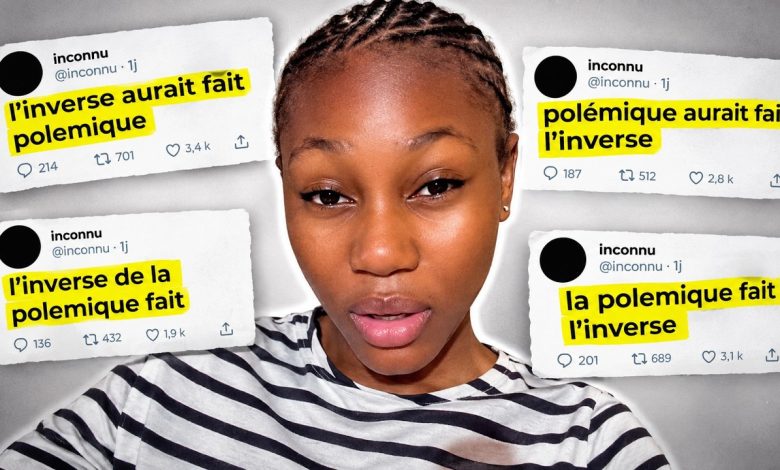
Social media can sometimes give the impression that anything can become a topic of debate, provided it is presented strongly enough to trigger reactions. In his video, Tobeh looks at this mechanism: in his view, much content does not so much seek to express a conviction as to provoke, get people talking and attract visibility.
His starting point is the “red flag” trend, referring to behaviors or characteristics presented as warning signs in a relationship. The creator does not necessarily dispute the idea that a person may have expectations or boundaries. Instead, he questions the very broad extension of this label, applied to situations, occupations, habits or possessions that do not necessarily say anything about a person’s behavior in a relationship.
When “red flag” becomes a catch-all label
In the examples discussed, the term “red flag” is used to refer to very different things: a lack of romance, hygiene, the way someone dresses, or even owning a phone model considered too old. For Tobeh, some remarks may seem understandable when they concern the way someone behaves or takes care of themselves. But he believes the logic becomes excessive when it targets elements with no direct connection to the quality of a relationship.
He notably mentions videos in which a man’s job or professional situation is itself presented as grounds for rejection. Mechanic, tailor, taxi driver, telephone service salesperson or someone pushing a cart: in the clips he summarizes, these activities are reduced to a negative label. The creator questions this approach: how could a person’s occupation alone be enough to define them or determine their value in a relationship?
The same reasoning is applied to people described as “still figuring themselves out.” Tobeh points out the vagueness of this phrase and criticizes the idea that someone still looking for their path would not have the right to love or be loved. Through these examples, he mainly denounces a series of quick judgments designed to be repeated, challenged or endorsed in the comments.
Opposing messages, the same search for engagement
The video also examines two styles of content that appear to be opposed. On one side, some male or female creators publish lists of supposed flaws in men. On the other, other videos criticize women who go out, smoke shisha, frequently appear in party settings, get tattoos or post certain images of themselves.
Tobeh observes that the angles differ, but the method may be similar: adopting a highly categorical stance on relationships and behavior in order to mobilize an audience. The messages may appeal to some users, especially those who identify with them or see them as validation of their own opinions. They may also irritate the people directly targeted, further fueling the exchanges.
The creator stresses that romantic preferences are not the same for everyone. In his commentary, he notes that people with different behaviors can find a partner and build a relationship. His point is therefore not to establish a model of womanhood or manhood to follow, but to question absolute judgments presented as universal truths.
Controversy as an editorial shift
Another central element of the video concerns the evolution of certain accounts. Tobeh mentions older content, including dance videos, Snapchat posts, vlogs or more ordinary formats, that may not have received the expected attention. He then interprets the shift toward provocative statements as a response to this search for visibility.
This interpretation remains the creator’s own: he believes that some creators have noticed that polarizing messages generate more comments, follows and reactions. He does not claim to establish the actual intentions of every person involved. However, he highlights a contrast between older content and recent videos, which are much more focused on injunctions, criticism or generalizations about relationships between women and men.
For Tobeh, this mechanism is reinforced by the audience itself. Comments praising someone as a role model, an “aware” voice or an ideal future wife can encourage the repetition of the same format. Conversely, criticism and outrage also help circulate the video. In both cases, attention remains at the center of the system.
The reverse mirror: “red flags” aimed at women
The video also notes that men create their own lists of “red flags.” Some are presented in a more humorous tone: a man who does not react to a photo, does not give gifts, does not provide money or does not reassure his partner enough would thus be a bad sign. Tobeh also ironically cites content in which a woman with no income would be considered problematic because she could not fund some of her partner’s needs.
These examples are used to show that the formula can be turned in every direction. Once it becomes an easily recognizable code, it makes it possible to quickly produce content. All it takes is adding an expectation, a frustration or an ordinary situation, then concluding with “red flag.” The goal then seems less about adding nuance to an experience than about producing an immediate reaction.
Repeating a format that works
Tobeh also mentions female creators who have long posted videos about “types” of men: those who reassure, those who like to be pampered, and those who stay silent when they encounter financial or personal difficulties. He acknowledges that these profiles may exist and that some people may recognize themselves in these descriptions.
His criticism is instead directed at repetition. In his view, when an account continually uses the same structure, the content can end up moving away from genuine reflection on relationships and become an engagement formula. The videos may seem harmless, but they are designed to appeal to a specific audience and prompt responses.
“The reverse would have sparked controversy,” an expression that has become automatic
In the final part, Tobeh focuses on an expression he says he frequently sees in comments in Côte d’Ivoire: “the reverse would have sparked controversy.” Originally, this phrase can be used to point out a possible difference in treatment between male and female behavior. However, the creator believes it is now used in a wide variety of contexts, sometimes with no clear connection to its original meaning.
He describes an expression repeated to the point of becoming a meme, with deliberately absurd variations. This very disconnect is what amuses him: the phrase is not always funny in itself, but its excessive repetition and the ways it is repurposed end up creating a particular kind of humor.
A conclusion without injunctions
At the end of his video, Tobeh does not propose a strict rule about what internet users should post. He mainly observes that some of the most visible content seems to rely on provocation, generalizations and topics capable of dividing people. His conclusion remains simple: everyone does what they want on social media.
His analysis nevertheless invites viewers to consider what lies behind a shocking statement or a list of “red flags”: a sincere opinion, a sketch, a repeated format, or an attempt to capture attention. On platforms, these dimensions can blend together, and it is often this ambiguity that makes videos circulate.
FAQ
What does Tobeh criticize in “red flag” content?
He mainly criticizes the excessive use of the term to judge occupations, possessions or situations that, in his view, are not enough to define a person or a relationship.
Does the video only target content criticizing men?
No. Tobeh also comments on content targeting women and videos produced by men. His main subject is the search for visibility through provocative messages.
What does “the reverse would have sparked controversy” mean in the video?
The phrase is presented as an expression used to highlight a possible difference in reactions depending on whether the action is carried out by a man or a woman. Tobeh believes it is now repeated in many contexts, sometimes automatically.
Video source: A video by Tobeh: You say absolutely anything on social media, actually… (Côte d’Ivoire)
">La Seductrice
Follow on X
Send an email