5 misconceptions about masturbation to put into perspective
 ">La Seductrice
Follow on X
Send an email
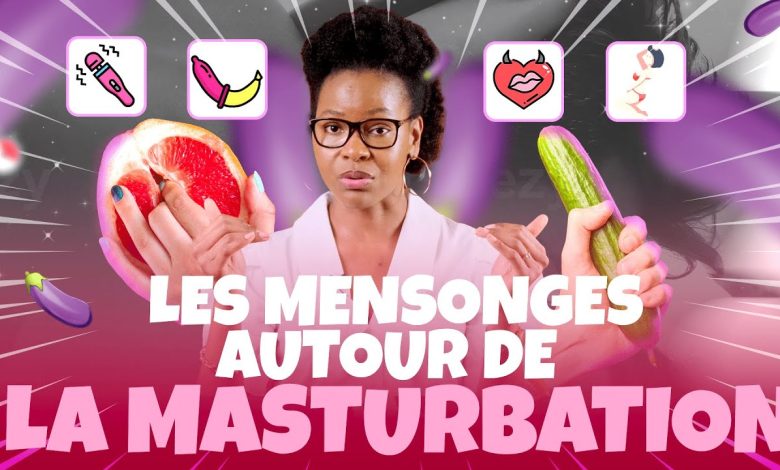
Masturbation still gives rise to many alarmist or guilt-inducing messages. In his video, Dr Paul Moko, a sexologist, reviews five common misconceptions. His guiding principle is nuance: he distinguishes masturbation itself from specific situations, particularly when it becomes compulsive, addictive or based on very intense stimulation.
This approach avoids two opposing shortcuts: considering all masturbation problematic, or overlooking the fact that a practice experienced as compulsive can sometimes affect partnered sexuality. Here are the five claims examined in the video.
1. “Masturbation causes erectile dysfunction”
According to Dr Paul Moko, masturbation does not, in itself, cause erectile dysfunction. However, he makes an important clarification about the context in which it is practised.
To explore this point further, our article on Oral Sex: How to Talk About It with Your Partner While Respecting Desire provides useful context and a broader perspective.
He mentions the case of compulsive or addictive masturbation, accompanied by increasingly intense stimulation. According to him, this may include highly stimulating pornographic content or mechanical habits that are difficult to reproduce with a partner. In this situation, a person may have greater difficulty achieving an erection during partnered sex because their usual stimulation is no longer the same.
The distinction is therefore essential: the video does not present masturbation as an automatic cause of impotence. Rather, it encourages viewers to consider the intensity of stimulation, the compulsive nature of the practice and any mismatch with experiences shared with a partner.
This issue ties in with the reflections developed in the article on myths surrounding porn, performance and erections. It points out that representations and performance expectations can affect the way people experience their sexuality.
2. “Masturbating while in a relationship proves there is frustration”
For the sexologist, this statement is neither entirely true nor entirely false. In some couples, masturbation can indeed be linked to dissatisfaction: a person may turn to it when they feel they have not been satisfied or have not reached orgasm during sex.
To explore this point further, our article on What Gift Should You Give for Valentine’s Day? Ideas for Your Couple provides useful context and a broader perspective.
To explore this reflection further, our analysis devoted to What Valentine’s Day gift should you give? Ideas designed for your relationship offers additional insight and places this point in a broader perspective.
But this is not the only possible explanation. Masturbation can also be a form of individual pleasure that contributes to personal fulfilment without calling shared sexuality or the other partner’s abilities into question.
The difficulty often arises when the person who does not masturbate finds out about it and interprets it as a sign of inadequacy, or even as a form of betrayal. The video therefore encourages people not to jump to conclusions: the key is to understand what masturbation represents for the person concerned. Is it a response to frustration within the relationship, or a space for individual pleasure?
This idea is part of a vision of intimacy in which each person can give, receive and express desire. The article about not reducing an intimate relationship to the other person’s pleasure alone extends this reflection: a fulfilling sexuality does not require one partner to erase themselves completely.
3. “Masturbation makes you deaf, ill or gives you pimples”
On this point, Dr Paul Moko is unequivocal: according to him, these are false beliefs. He specifically mentions the ideas that masturbation causes deafness, blindness, illness or pimples.
In the video, he points out that many people discover their sexuality through masturbation during adolescence. In his view, these messages are therefore misconceptions that unnecessarily perpetuate fear and shame around sexuality.
This third point differs from the others: it is not about a nuance linked to context, but about claims that the sexologist clearly rejects.
4. “Masturbating often causes premature ejaculation”
Here again, the video calls for a distinction between masturbation and certain habits that can accompany it. For Dr Paul Moko, masturbation alone does not cause premature ejaculation.
Along the same lines, Ejaculation Without Pleasure: Why Ejaculation Does Not Sum Up Male Desire offers additional insights for understanding the subject.
However, he describes a situation in which compulsive masturbation, performed under high tension and with significant muscular tightness, could have repercussions during partnered sex. He adds that a person who has lost the habit of experiencing shared sexuality may feel stressed when returning to it, and that this stress can also play a role.
The video also highlights the opposite idea: when properly practised and guided, masturbation can, in some cases, be used as part of a therapeutic approach to premature ejaculation. The point is therefore not to condemn the practice, but to consider the pace, the level of tension and the person’s experience.
It may also be helpful not to confuse ejaculation with pleasure as a whole. The article on the difference between ejaculation and orgasm explores this distinction: the physical response alone does not sum up the bodily, emotional and relational experience.
5. “A woman who uses a sex toy can no longer enjoy partnered sex”
The final myth concerns the use of sex toys during masturbation. According to Dr Paul Moko, using a sex toy does not mean that a woman will no longer be able to experience pleasure in partnered sex.
This analysis can also be compared with Fantasies Considered “Weird”: How to Talk About Them Without Shame With Your Partner, which examines this issue in greater detail.
As in the previous points, however, he mentions the case of compulsive or addictive use based on stimulation that differs greatly from what is possible in sexual activity without a sex toy. He gives the example of very large toys. In such a context, he believes that rediscovering pleasure in partnered sex that excludes these objects may be more difficult, unless appropriate support is provided.
Outside this specific case, using a sex toy is not presented as an obstacle to shared pleasure. Above all, the sexologist points out that an object replaces neither kisses, cuddles nor tenderness. In other words, partnered sexuality is not limited to one specific form of stimulation.
The search for new sensations can also be considered without reducing intimacy to performance or results. From this perspective, the article on exploring pleasure and breaking out of routine through masturbation encourages readers to consider the setting, imagination and sensations, with caution and attention to what suits each person.
What to take away from these five misconceptions
The video advocates a contextualised approach to masturbation. Beliefs that automatically attribute illness, deafness or physical disorders to it are rejected by Dr Paul Moko. For the other claims, his answer is more nuanced: masturbation is not automatically the cause of erectile problems, premature ejaculation, frustration within a relationship or difficulty enjoying partnered sexuality.
On the other hand, a practice experienced as compulsive, associated with increasingly intense stimulation or stimulation that differs greatly from partnered experience, may, according to him, raise difficulties. The central issue is therefore not to judge masturbation, but to understand the place it occupies, the habits it creates and the effect it does—or does not—have on well-being and the relationship.
FAQ about misconceptions related to masturbation
Does masturbation while in a relationship necessarily mean that the partner is not satisfied?
No, according to the video. It can sometimes reflect frustration, but it can also be a source of individual pleasure that does not call the relationship or desire for one’s partner into question.
This analysis can also be compared with Sex Toys: Avoiding Routine and Exploring Your Pleasure More Fully, which examines this issue in greater detail.
Can masturbation cause erectile dysfunction?
Dr Paul Moko explains that masturbation itself is not the cause. However, he warns against compulsive practice involving very intense stimulation, which can make adapting to partnered sexuality more difficult.
Do sex toys prevent people from enjoying partnered sexuality?
No, not necessarily. The video indicates that the risk mentioned mainly concerns compulsive use involving stimulation that differs greatly from that of partnered sex. A sex toy does not replace the emotional and relational dimension of intimacy.
Video source: “05 MENSONGES SUR LA MAST*RBATION !” on YouTube.
">La Seductrice
Follow on X
Send an email